
TL;DR
-
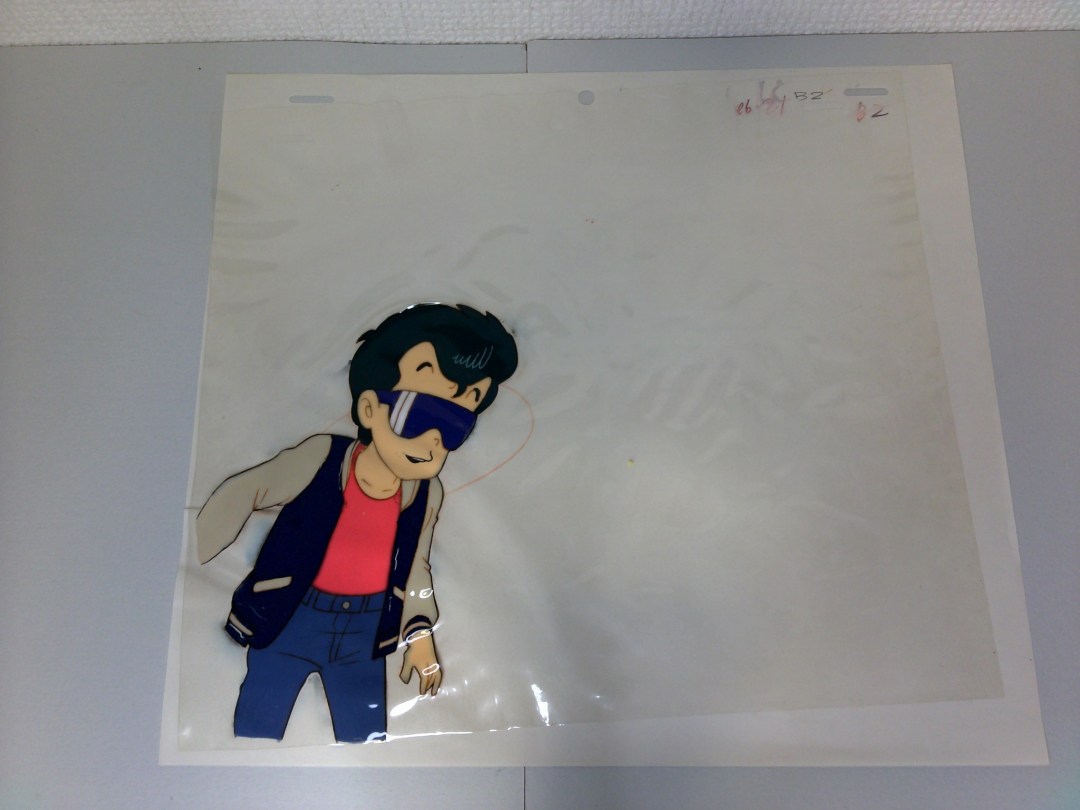
Authentic 1980s Dr. Slump production cel featuring Taro Soramame
-
Includes the matching douga (pencil drawing)
-
Vibrant colors with minor age wear; douga shows typical studio use
-
Increasingly rare Toriyama-era production art from a major Toei series
-
Ideal for framing, archiving, or adding to a Toriyama collection
Quick Specs
-
Series: Dr. Slump (1981–1986)
-
Character: Taro Soramame
-
Studio: Toei Animation
-
Medium: Hand-painted cel on acetate + pencil douga
-
Markings: B2 (sequence number)
-
Dimensions: ~10.5″ × 9.5″ (standard Toei cel size)
-
Condition: Used – Good (cel bright, minor wrinkling; douga aged/creased)
-
Includes: Cel + matched douga + protective sleeve
Overview / What It Is
This is a genuine, screen-used hand-painted animation cel of Taro Soramame from Dr. Slump, Akira Toriyama’s comedic classic that set the stage for Dragon Ball. Taro appears here in one of his trademark “cool guy” poses—sunglasses, casual lean, and the confident attitude that made him a staple side character in Penguin Village.
Unlike modern digital animation, every frame of 1980s anime was painted by hand. This cel was photographed for an actual episode, with the included douga serving as the animator’s foundational drawing. Together, they represent a complete, authentic artifact from Toei’s pre-digital production pipeline.
Product Images
Image copyright usage rights: You may use these images for any of your posts or projects, so long as you attribute Japan Bound as the creator and link to this post as the source of the images


How It Works
In traditional cel animation, each shot goes through several steps:
-
Douga (pencil drawing) is drawn by animators and passed to ink/paint staff.
-
Line art is transferred to a clear acetate cel using ink or xerography.
-
Colors are painted on the back of the cel for clean, bold lines.
-
The cel is placed over a background, aligned using 3-hole peg bars, and photographed.
Your cel’s markings—B2—identify the cel’s position within a sequence. “B” usually refers to a secondary layer or particular character layer within the shot.
Both pieces show genuine production wear, verifying their use in Toei’s animation studio rather than later reproduction or fan-made copies.
Who Should Buy This
-
Cel collectors seeking named-character cels from major 80s anime
-
Toriyama fans who want pre-Dragon Ball-era artwork
-
Vintage anime enthusiasts building out Toei Animation collections
-
Art collectors interested in original, one-of-a-kind production pieces
-
Decorative collectors looking for frame-worthy 80s cel art
Taro cels are less common than Arale or Gatchan pieces, making this a nice mid-tier rarity.
Pros & Cons
Pros
-
Includes both cel and matching douga
-
Bright, clean paint with no major flaking
-
Desirable named character from a Toriyama series
-
Marked and production-used (B2)
-
Perfect for framing or archival collection
Cons
-
Light wrinkling in the cel surface
-
Douga shows aging, creasing, and smudging
-
No background layer included
-
Fragile medium that requires gentle handling
Setup / Usage Tips
-
Frame using UV-safe acrylic (not glass) to prevent sticking and fading.
-
Avoid heat and humidity—Japanese summers can warp cel acetate quickly.
-
Store flat in an archival sleeve if keeping it unframed.
-
You can find acid-free backing boards at most shops like Tokyu Hands, Loft, or some コンビニ (konbini, convenience store) stationery aisles.
-
When framing the cel + douga together, use a double-window mat to display both safely.
Popularity, Sales Numbers & Critical Reception
Dr. Slump was a major success in Japan, regularly ranking among the top children’s anime of the early 1980s. According to Toei Animation’s historical production notes and coverage in Nikkei Entertainment, the series helped propel Akira Toriyama to national fame even before Dragon Ball debuted.
Because Toei abandoned cel-based production in the mid-1990s, original Dr. Slump cels are permanently limited. Cels of core characters (Arale, Gatchan) dominate the collector market, while cels of supporting characters like Taro Soramame appear less frequently and are often snapped up quickly.
In recent years, with the global surge of interest in Toriyama’s legacy, demand for authentic vintage cels has increased—especially those paired with matching douga, which boosts provenance and collector value.
FAQs
Is this cel one-of-a-kind?
Yes. Each hand-painted cel is unique and was photographed for a specific frame.
What does “B2” mean?
It indicates the cel’s sequence and layer number. “B” layers typically represent a particular character layer or positioning within a scene.
Why does the douga look smudged or aged?
Douga were working documents handled by animators, frequently stacked, erased, and redrawn. Aging is normal and expected.
Does this include a background?
No. Most cels were separated from their backgrounds when studios cleared archives.
Is it safe to frame the cel and douga together?
Yes—if using archival materials and UV-protective acrylic.
Where to Buy
-
Japan Bound eBay Store (recommended) — If you message us on Japan Bound, you can buy it from us directly for 15% off the eBay price.
About the Author
Limarc Ambalina is a longtime Japan culture and pop-culture journalist. He lives in Japan and is a longtime video game and Japanese pop culture memorabilia collector. The product images in this article were taken by him directly. The information in this article has been verified by his personal testing/usage of each product listed.
