
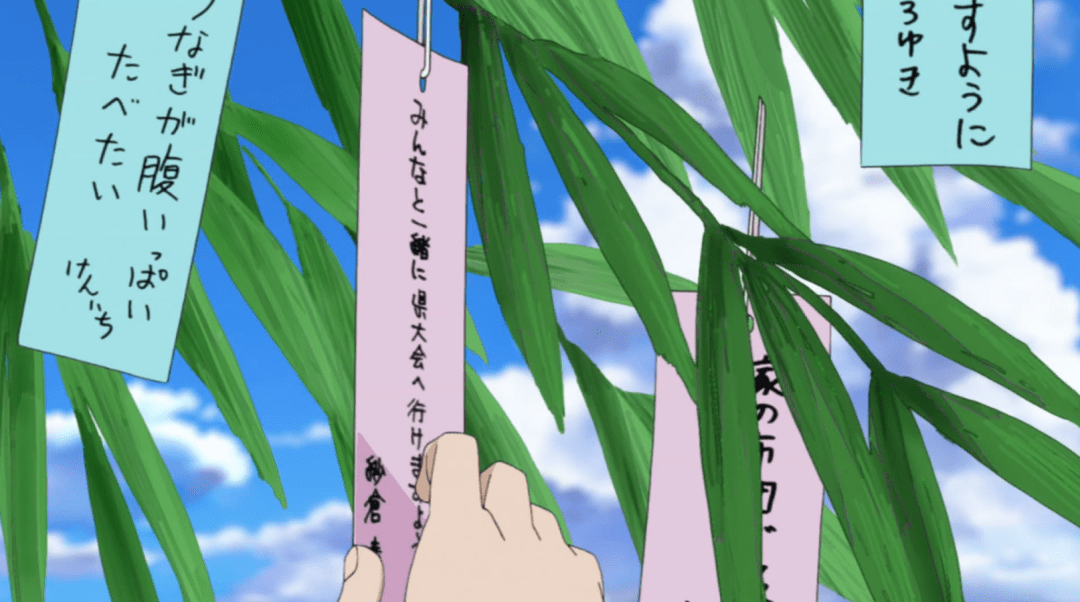
Out of all of Japan’s major holidays, Tanabata has the most interesting story behind it.
It’s a tale written in the stars, about a princess in a doomed romance, and it ends with making wishes come true.
It should come as no surprise that this holiday shows up in anime and manga a lot.
If you’ve never heard of Tanabata, keep reading. It’s a fascinating event worth knowing about.
Tanabata Basics
In Japan, Tanabata is celebrated on July 7. It’s not one of Japan’s official, government-recognized public holidays. In fact, it’s not a day off for most people, and the post office operates as usual.
However, Tanabata is one of the gosekku (五節句), a group of five classic, ancient festivals and holidays which are still celebrated in Japan today.
The Japanese holiday is partially based on a Chinese event known as the Qixi Festival or the Qiqiao Festival. Naturally, like a lot of things imported from China during ancient times, some of the details got changed around, and some new ideas got added. For example:
- Chinese versions emphasize the romantic aspects of the story.
- The Chinese story includes more characters, including a self-sacrificing ox, and/ or some bridge-building magpies. These details got edited out of some Japanese versions.
- Japan added the idea of writing down wishes on strips of paper, and tying the wishes to bamboo.
- Japanese Tanabata decorations are different from Chinese ones.
In addition, both countries have always celebrated the event on “the seventh day of the seventh month.” When Japan first adopted the festival, 7/7 was close to the Obon festival in August.
However, when Japan switched to the Gregorian (“Western”) calendar, “the seventh month” changed to July. Qixi continues to follow the old Chinese lunisolar calendar.
The name Tanabata can be written as 七夕, or as たなばた, and the kanji translates out as “the Seventh Evening.” It is also known as “the Star Festival,” or Hoshimatsuri (星祭り).
While these names are accurate, they don’t tell the full story.
The Story of Tanabata

The story of Tanabata has been told a lot of different times, and not always the same way.
With that in mind, the following is based on a combination of personal recollections, local Tanabata events, various storybooks, and online versions of the tale:
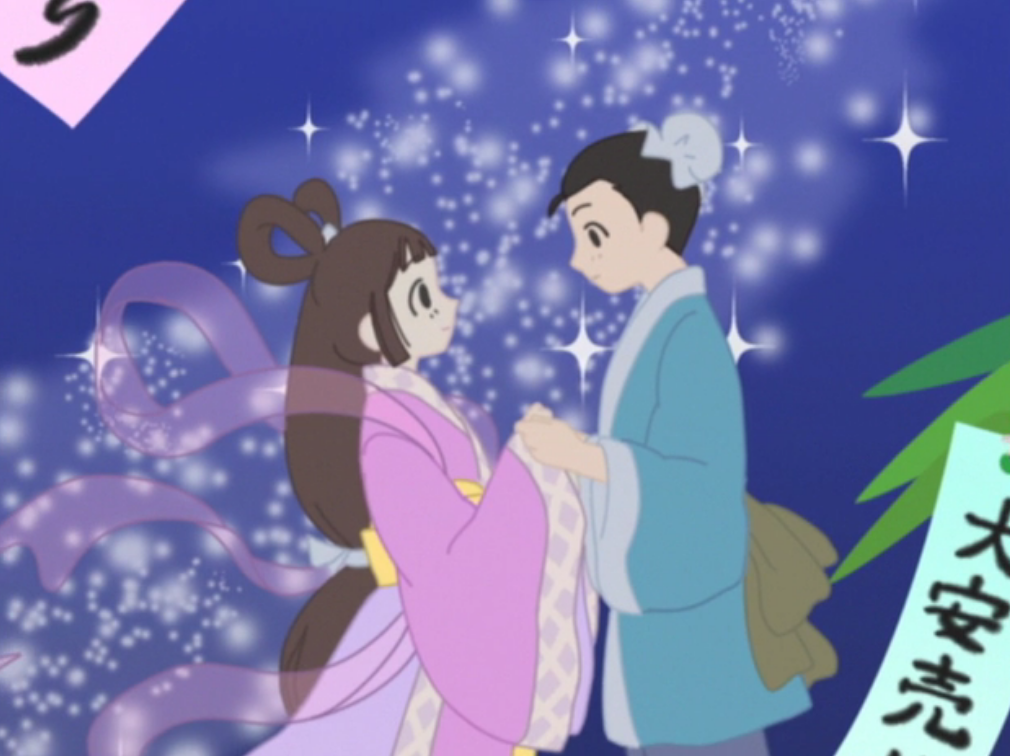
The story begins with a princess named Orihime (おりひめ, or 織姫). Some stories don’t call her a princess. But she was undeniably the daughter of the Sky King, who was basically the Emperor of the Universe. And the hime (姫) part of her name means princess in Japanese.
Orihime was an amazing seamstress and cloth weaver, which is why she is also known as “Weaver Maiden” or the Weaving Princess.
One day, Orihime fell in love with a cow herd named Hikoboshi (ひこぼし or 彦星). In some versions, this cow herd was below Orihime in status, which adds a bit of class conflict to the story.
Some stories say that they got married. Either way, the two lovers spent so much time together that they soon forgot to do their duties. As a result, the king forced the two to stay apart. The heart-broken lovers begged the king to reconsider.
Finally, the king agrees to let Orihime and Hikoboshi meet once a year, during the summer. Every year, the two meet at a bridge over a river.
Today, we know these lovers as the stars Altair (Hikoboshi) and Vega (Orihime). And the celestial “river” is the Milky Way. During the summer months, these stars appear on opposite sides of the Milky Way.
Tanabata Traditions
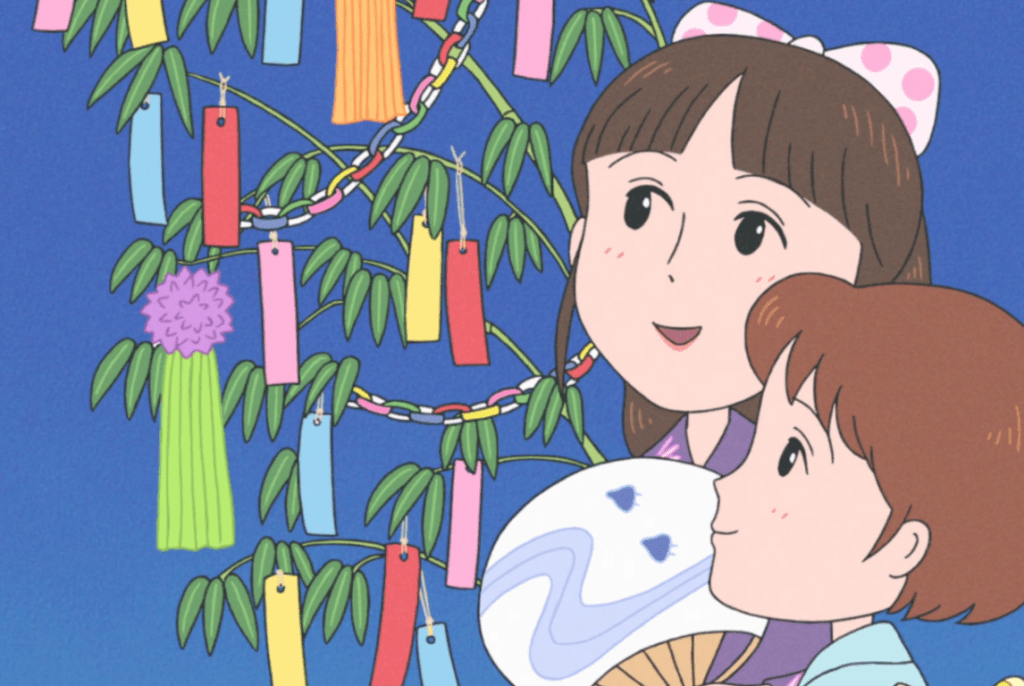
The most famous tradition of Tanabata is the making and granting of wishes. According to legend, Orihime and Hikoboshi are the ones who grant the wishes.
In addition to granting wishes, they also have a wish of their own — for the weather to be good enough so they can see each other on their special evening.
During Tanabata, wishes are written on colorful paper slips, called tanzaku (短冊). These are typically tied to bamboo, which is fast-growing, tall enough to reach the stars, and considered lucky. The paper-covered bamboo also makes a colorful decoration for the holiday.
In addition to the bamboo, some places have other Tanabata decorations. Sendai’s Tanabata is known for giant, paper ornaments which sway in the wind. (Little Tokyo in Los Angeles borrowed the concept for its Tanabata celebration.)
Because Orihime and Hikoboshi are stars, some people also like to go stargazing.
Tanabata in Anime/ Manga
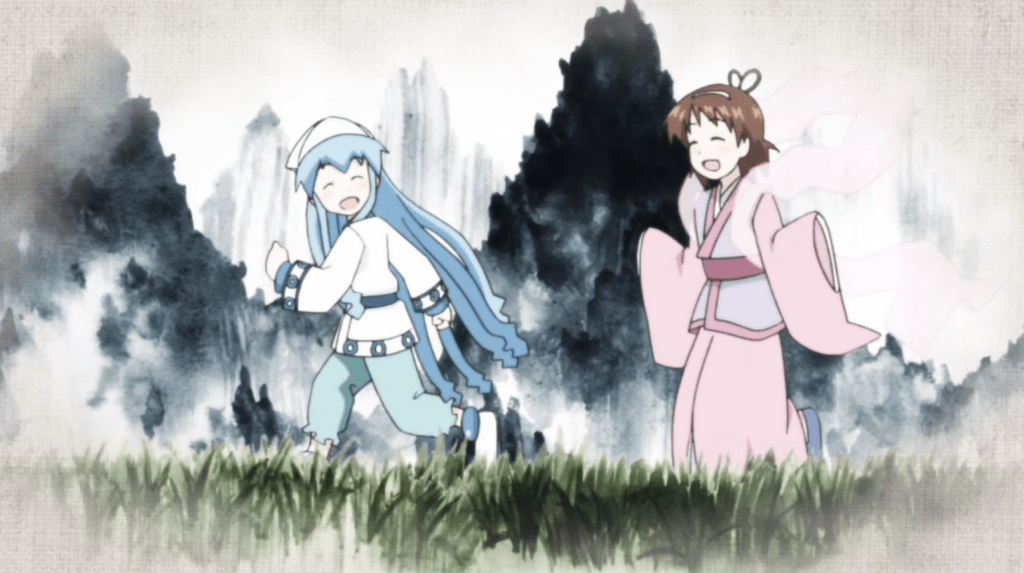
Because Tanabata takes place in summer, some anime shows overlook it in favor of other summer festivals (natsu matsuri, or 夏祭り) — especially ones that involve yukata, fireworks, food and/ or carnival games.
However, Tanabata does show up in slice-of-life comedy series. The romantic aspect of the holiday can make for good romantic comedy as well.
Compared to some events, these shows tend to get the holiday right, perhaps because Tanabata is not a Western holiday adapted for Japan.
As the following examples show, they often exaggerate stuff for comic effect, but at least the important bits are portrayed relatively accurately. For example:
The Melancholy of Haruhi Suzumiya
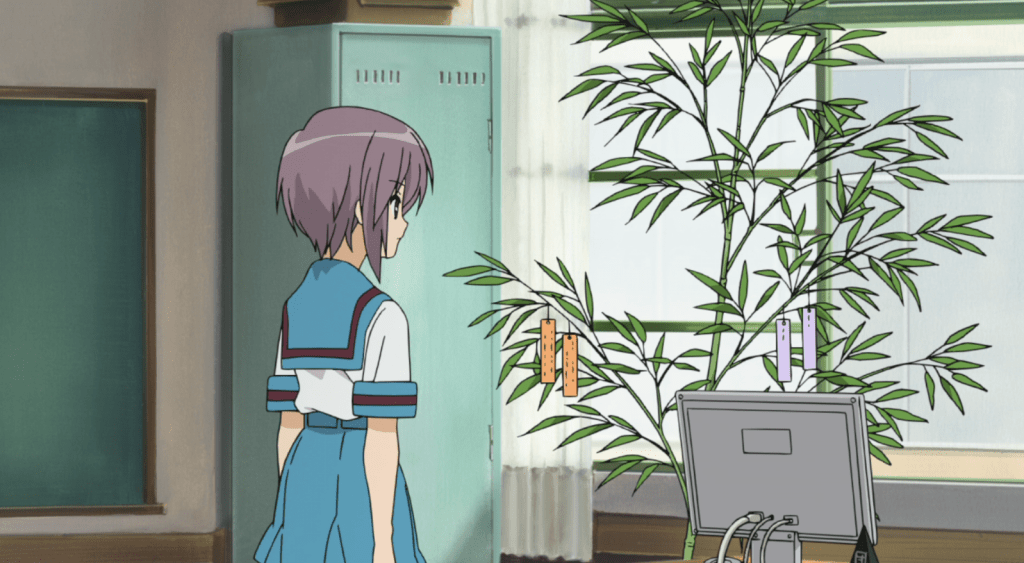
Tanabata plays an important role in Bamboo Leaf Rhapsody, a season 2 episode of The Melancholy of Haruhi Suzumiya.
The episode follows the plot of one of the short stories included in The Boredom of Haruhi Suzumiya, the third book in the Haruhi light novel series.
The main focus of the story is a time-travel adventure, which reveals some of Haruhi’s past. But, there’s a lot of Tanabata there;
- The characters discuss the Chinese origins of the holiday, including whether it should be celebrated in July or August.
- Haruhi steals/ borrows bamboo for the brigade to use as a wishing tree.
- Haruhi points out that the actual stars are light years away; therefore the wishes should take time to grant. (This is her idea, not part of the tradition.)
Ika Musume
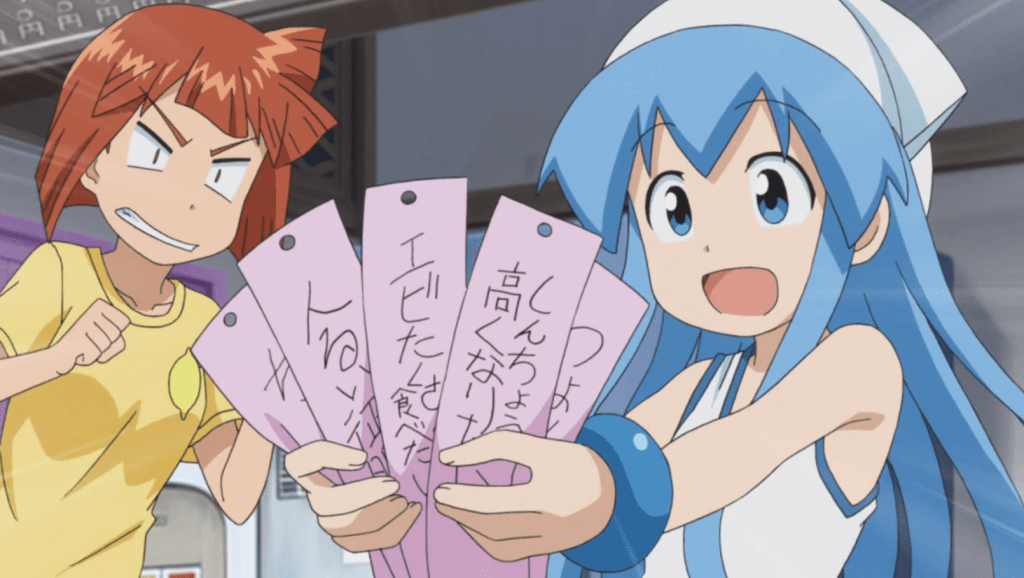
In a season 2 episode of the series, Ika Musume learns about the wish-granting part of Tanabata.
At first, she’s very excited about it, and tries to write down lots of wishes. But after being told she should only make one wish, she can’t make up her mind about what to wish for.
(As far as my research can tell, there’s no rule against making more than one wish. But as the episode points out, it’s definitely rude, greedy, or selfish to make too many.)
In the end, the episode also explains the folklore behind the wishes.
Urusei Yatsura
Chapter 36 of Urusei Yatsura is titled Tanabata Date (七夕 デート).
The manga starts with Lum watching a romantic TV program about Orihime and Hikoboshi. This inspires her to want to go out on a date with Ataru.
Episode 39 of the anime reworks it as Doki Doki Summer Date (どきどき サマー デート). Unfortunately, the anime removes all mention of the holiday.
Other
Doraemon — In one episode, the robot cat from the future comes up with a technological replacement for the wishing trees — wish-granting rockets.
Lucky Star — Tsubasa and Kagami were born on Tanabata. However, the girls decide to celebrate Ponytail Day (an actual holiday) instead. According to Konata, July 7 is Ponytail Day because Orihime had one.
Bleach — Orihime Inoue was named after the princess in the Tanabata story. At one point, Ichigo was supposed to be her Hikoboshi. In the epilogue of the series, she marries him.
Other anime series with Tanabata-themed episodes include Chibi Maruko-chan, Folktales from Japan, Keroro Gunso, GeGeGe no Kitaro, etc.
And so that’s Tanabata — a fun holiday with an interesting tale behind it. I hope you get the chance to celebrate it.

They did talked about this in that Oscar nominated film, “When Marnie Was There”. As well as that anime tv show “Hamtaro”. Heard of them??