

If you’re a fan of Japanese culture, you have probably run across yokai and kaiju.
From anime to books to video games, these fictional creatures make frequent appearances in Japanese storytelling. It’s hard to imagine Japan without them.
And yet, what exactly are yokai and kaiju? Are they good or evil? Are kaiju and yokai related?
Let’s take a look at these fascinating and uniquely Japanese creatures.
Defining Yokai

Many sources describe yokai (also spelled youkai) as an umbrella term to categorize numerous mythological and supernatural creatures.
Experts disagree about which creatures deserve to be called yokai. For example, some say that kami (the Shinto deities) should be left out, to avoid conflating mythology, folklore, and religion. In addition, some also separate yurei (幽霊) — i.e. ghosts of the dead unable to reach the afterlife — from yokai.
Unlike Western demons and devils, the term yokai is morally neutral and ambiguous. Helpful and friendly yokai exist; but also mischievous and playful ones; and dangerous ones.
(Of course, dangerous is not the same thing as evil. Lions are dangerous, but not evil.)
Examples of Yokai
As traditional parts of Japanese folklore and culture, yokai have existed for centuries. To name all of them would take forever, but here are some common ones:
Oni (鬼)

Oni have been described as demons, ogres, trolls, or even goblins. But these are just close approximations, not exact translations.
Oni are often depicted as humanoid creatures with long horns, and fangs. They are typically big, hulking beasts with superhuman strength. Oni also often carry large clubs. To emphasize their uncivilized nature, a stereotypical Oni outfit consists of loin cloths, or tiger-skin clothing.
Personality-wise, they tend to be evil, or at least foul-tempered. In some cases, they eat people.
- Oni are the arch enemies of the folk hero Momotaro (Peach Boy).
- The Red Oni Who Cried tells about a Red Oni who wants to be friends with humans. A Blue Oni helps him at his own expense. This is the basis of the “Red Oni, Blue Oni” concept in anime.
- Oni play a role in the February holiday of Setsubun. People traditionally toss fukumame (roasted soy beans) and shout “Oni wa soto! Fuku wa uchi!” (“Oni out! Good luck in!”) to drive away evil.
Tengu (天狗)
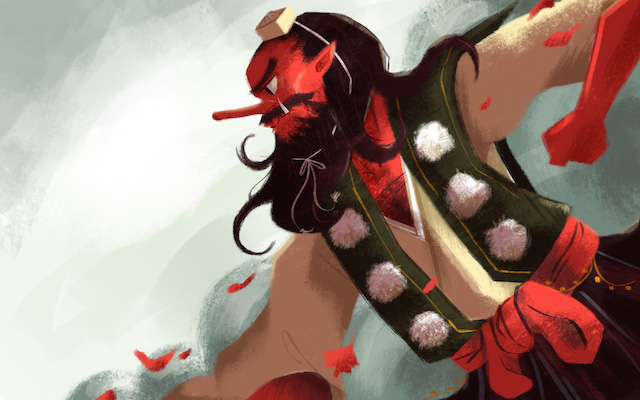
Tengu are winged, humanoid creatures with long noses. Artists sometimes depict them with feather fans. These hauchiwa can generate strong winds.
Tengu are also associated with the yamabushi, priest-like hermits who live in the mountains. Sources say that the typical Tengu outfit is based on the yamabushi’s outfit, including the box-like tokin hat.
Depending upon the source, tengu can be either good or evil.
- According to one legend, Tengu taught the medieval military hero Minamoto no Yoshitsune. This fits with the story that Tengu are excellent swordsmen.
- People have told many tengu-related traditional folktales. These stories tend to involve trickery, either by Tengu or by humans who encounter them.
- People hold Tengu Matsuri in various locations, including during Setsubun in February in Tokyo’s trendy Shimokitazawa neighborhood.
Kappa (河童)

Kappa are water creatures, known for their green, turtle-like appearance, webbed feet, and “dish” (sara) of water on their heads. In some pictures, they look reptilian; in other cases, they look more humanoid.
According to legend, Kappa like cucumbers, which is why cucumber rolls are known as kappa maki (かっぱ巻き).
- In folklore, Kappa sometimes drowned unwary humans. These precautionary tales warned children to be careful around rivers.
- Sogen-ji, a Zen Buddhist Temple in Kappabashi, Tokyo, is associated with Kappa. People nicknamed the temple Kappa-dera. And you can find Kappa statues there. However, Kappabashi (spelled 合羽橋, not 河童橋) actually means “raincoat bridge.”
Bake-danuki (化け狸)
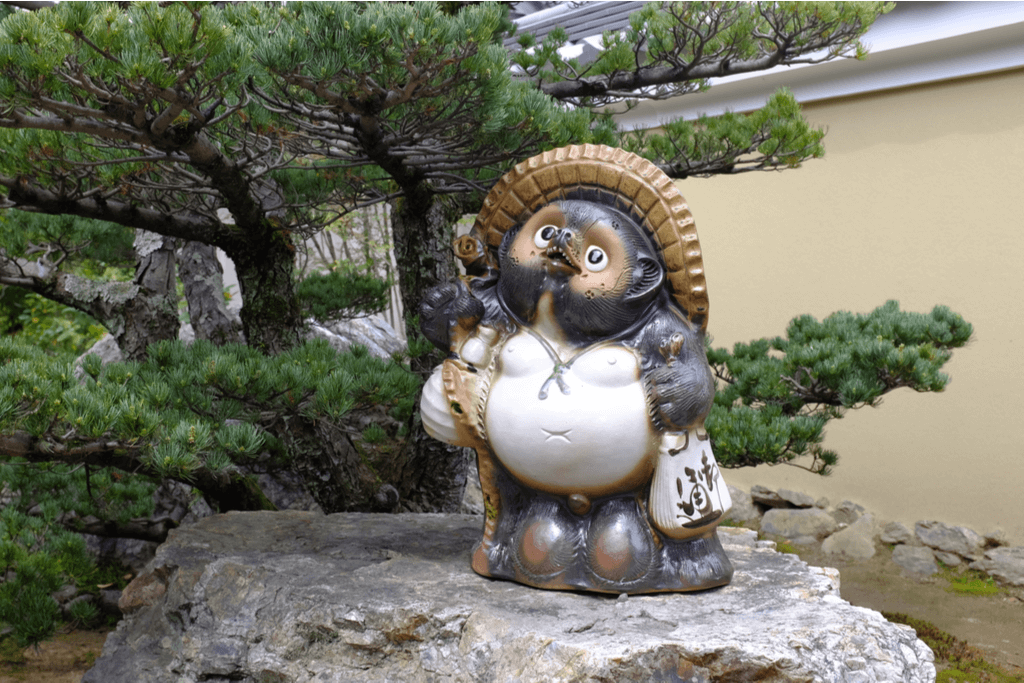
Bake-danuki are the yokai versions of tanuki (狸), or “raccoon dogs.” Tanuki actually exist; Bake-danuki are mythological.
In folklore, Bake-danuki are mischievous shapeshifters who could imitate humans. But they are also often less clever than kitsune (shapeshifting, trickster fox spirits). Apparently, Bake-danuki also like to drink, as they are often depicted with sake bottles.
- Japanese bars and restaurants sometimes place statues of Bake-danuki outside as good luck symbols.
Other Popular Yokai
- Rokurokubi (ろくろ首) — The “long-necked woman” may look normal at first. But at night, she becomes scary and frightening. Fortunately, many long-necked women aren’t evil, but tricksters, says folklore.
- Kasa-obake (傘おばけ) — According to legend, if an old-fashioned umbrella is discarded for a long time, it may become an umbrella ghost yokai. With their one eye and long tongue, they can look silly. But some are dangerous. In fact, there’s a whole category of objects brought to life, called tsukumogami (付喪神).
Yokai in Modern Media
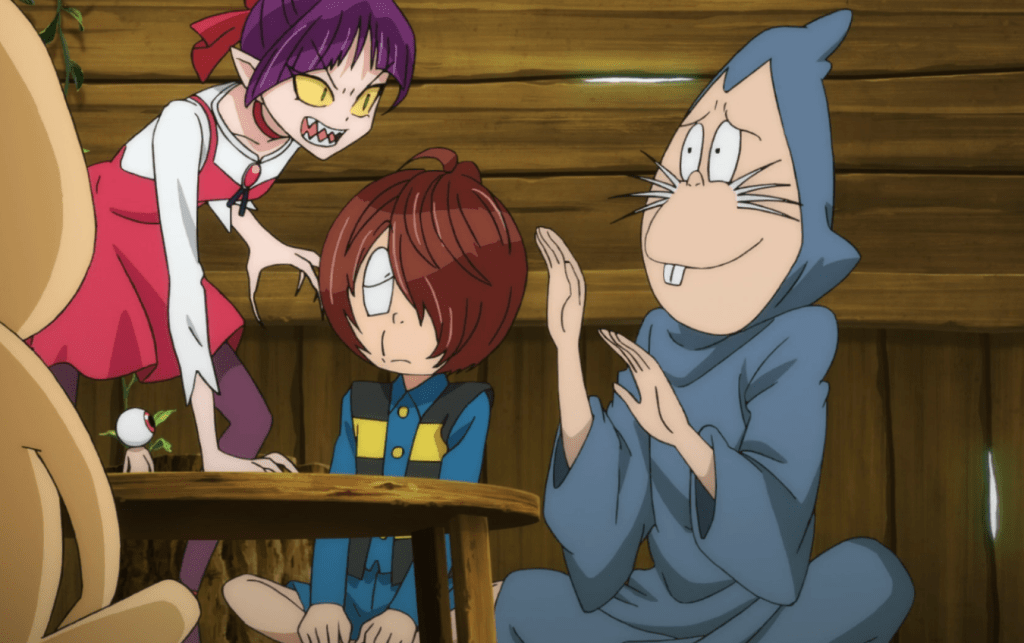
You will find yokai all over Hayao Miyazaki’s anime films. The Isao Takahata anime film Pom Poko features a colony of Bake-danuki.
Anime series with yokai themes include GeGeGe no Kitaro; Inuyasha (he’s a Hanyo, or “half-yokai”); Demon Slayer: Kimetsu no Yaiba; and even Urusei Yatsura (Lum is an Oni alien).
Many of the cute female characters in the video game franchise Touhou Project are also yokai.
Yokai in Kanji
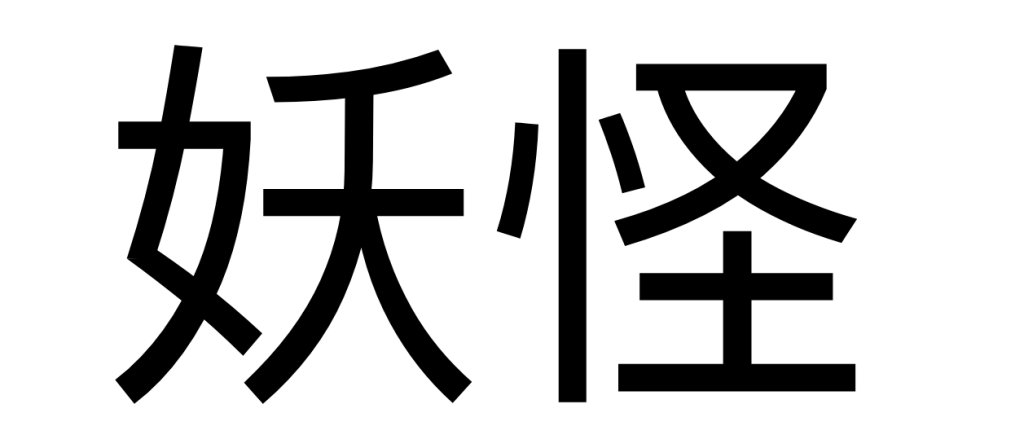
According to reports, the English language doesn’t have a word for yokai (妖怪). But sources translate it as “strange apparition” or “supernatural being.”
If we dissect the term, we see that it consists of two kanji characters. The first is 妖, which has a Chinese reading of yo (よう).
By itself, this kanji can mean “attractive,” bewitching,” or “calamity.”
In addition to yokai, yo is used for a variety of supernatural terms. These include:
- 妖精 yosei, or yousei — Japanese equivalent to a fairy
- 妖狐 yoko, or youko — a supernatural fox spirit, or another word for kitsune
The second half is 怪. It can be pronounced kai (かい). Kai can mean many things, including “strange,” “mysterious,” “suspicious,” “extraordinary,” “wonderful,” or “unusual.”
Interestingly, the kai for yokai is the same kai used for kaiju (怪獣). So, there is a linguistic link between yokai and kaiju.
Defining Kaiju
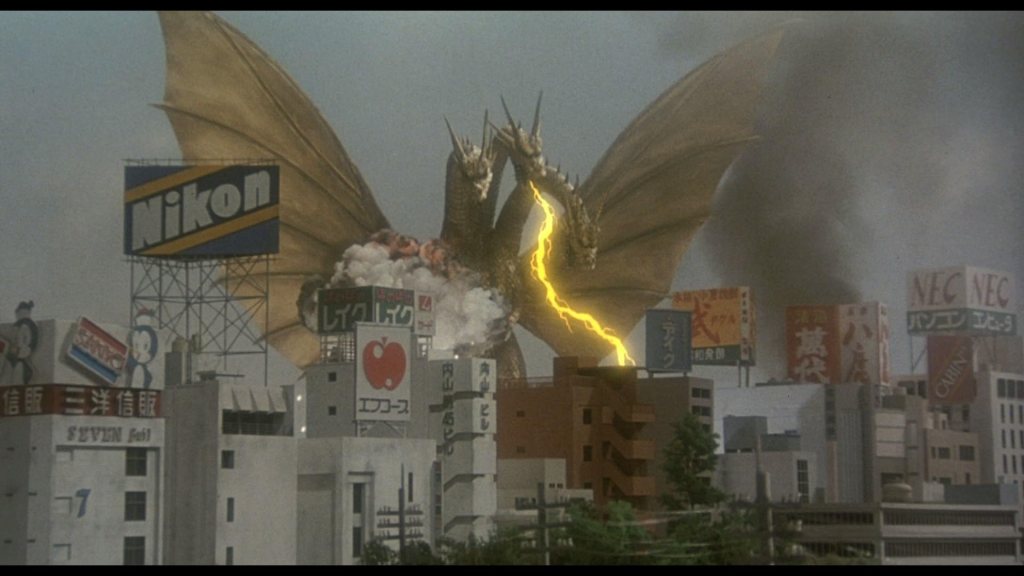
We’ve already examined the first kanji character in kaiju, kai.
The second kanji in kaiju is ju (獣). The kanji 獣 can also be read as kedamono (けだもの), or kemono, or けもの.). Both mean “beast”
So, one literal translation of kaiju would be “strange beast.”
It’s easy to think of kaiju as a modern concept. Kaiju films first came out in the 1950s. However, according to reports, the word kaiju actually dates back to ancient times.
Ancient Japanese mythology included dragons, sea monsters, and other giant creatures. But many of these would have fallen under the category of kami, not yokai or kaiju, because they were associated with Shinto or Buddhist beliefs.
But modern kaiju — Godzilla, Gamera, Mothra, etc. — made Japanese giant monsters into international stars.
Analyzing Godzilla
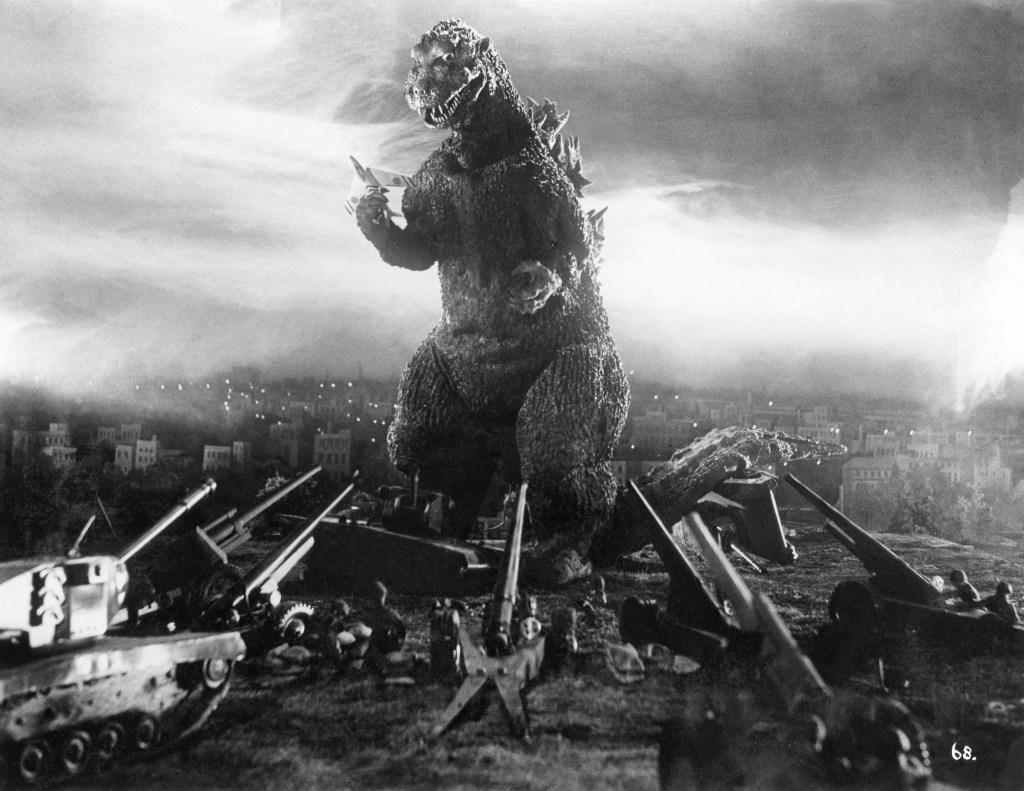
When we picture Godzilla, we tend to think of a giant, reptilian monster, perhaps resembling a dragon, or even a T-Rex or other dinosaur.
And yet, according to most sources, the monster’s original Japanese name, Gojira (ゴジラ), is actually a portmanteau of gorilla (ゴリラ or gorira) — as in King Kong — and whale (クジラ or kujira) — because Godzilla is a sea monster.
Toho made the first Godzilla (Gojira) movie in 1954. Since then, the “King of the Monsters” has appeared in 38 films, both Japanese and Western. For example:
- In the 1954 film, the kaiju clearly symbolizes atomic bombs. Godzilla was awakened by H-bomb testing.
- In Ghidorah, the Three-Headed Monster (1964), Godzilla, Rodan, and Mothra battle an alien monster. This was the first example of a “heroic” Godzilla.
- Godzilla vs. Hedorah (1971) had an environmental message. In case it wasn’t obvious, the title became Godzilla vs. the Smog Monster in the U.S.
In general, Godzilla films tend to be anti-nuclear, as the beast is destructive even when he saves Japan.
Conclusion
As you can see, yokai and kaiju play huge roles in Japanese storytelling and culture.
Once you know what to look for, you will find them everywhere.
