

Two essential phrases
When it comes to understanding Japanese, few phrases are more essential than sumimasen and gomenasai.
Both of these are frequently translated as “I’m sorry.” Naturally, given Japan’s well-deserved reputation as a polite society, these two phrases will get you through a lot of situations in Japanese culture. But which one should you use in which situations?
Literal and Implied Meanings
First of all, let’s try to untangle sumimasen and gomenasai (also spelled gomen nasai).
One easy rule of thumb is to use sumimasen in situations where you would say “pardon me” or “excuse me” (such as moving through a crowded public space).
Sumimasen can also be useful for politely getting somebody’s attention. It can also mean “thank you,” especially in response to someone helping you.
Gomenasai is somewhat less formal than sumimasen. It’s less likely to be used in the above examples. However, Gomenasai can be considered a useful, more informal form of “I’m sorry.”
But, there’s obviously more to it than just that.
Dissecting Sumimasen and Gomenasai
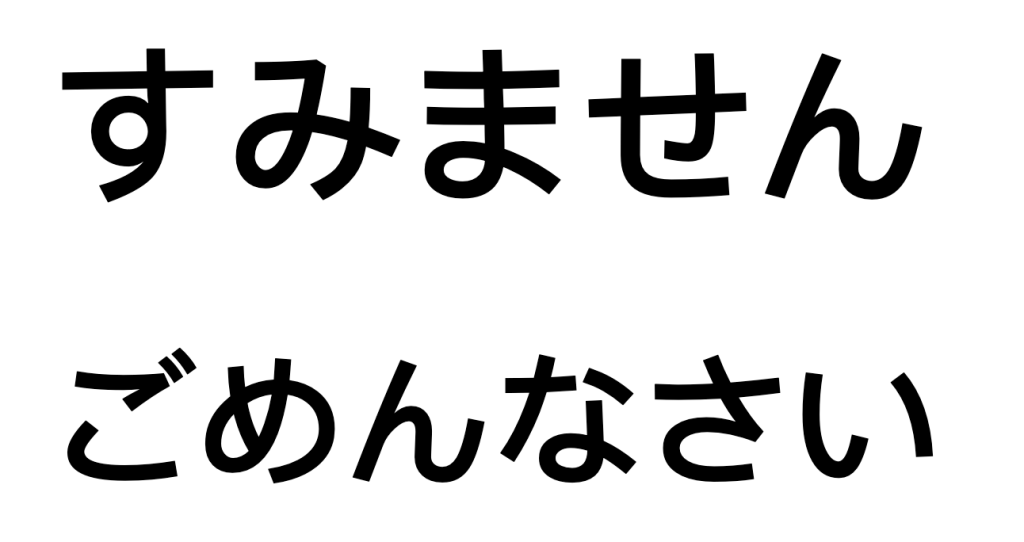
Sumimasen (済みません, すみません) is a negative form of the verb sumu (すむ). The word consists of a mixture of kanji and hiragana:
- 済 (su): This kanji is used for a verb meaning to finish, or to settle.
- み (mi): The second half of the verb sumu, conjugated as sumi.
- ません (masen): This verb ending makes the verb negative.
Put together, sumimasen literally means “(this thing) is not settled.” In context, the “thing” is what you’re apologizing for. You’re apologizing that the matter is not settled. (In other words, if you make a mess, it will need to be cleaned up.)
Gomenasai, or gomen nasai (御免なさい, ごめんなさい) contains two kanji and some hiragana.
- 御 (go): This honorific kanji adds respect to the rest of the phrase, but it can also mean “royal,” “beauty,” or “control.”
- 免 (men): This kanji is used in verbs meaning “to avoid,” “to release,” “to exempt,” “to forgive,” or “to dismiss.”
- なさい (nasai): This verb ending makes the verb imperative, implying a request.
As you can see, when you say “gomenasai,” you are honorably requesting a pardon or forgiveness.
Levels of politeness
Earlier, we mentioned that sumimasen is more formal than gomenasai. But even gomenasai is somewhat formal. If you want to apologize for something minor, gomenasai can be softened to a less formal form — gomen ne (ごめんね).
Or you can strengthen gomen by adding the ultimate politeness word, please — kudasai (ください). Gomen kudasai (ごめんください) translates as “forgive me, please.”
Note: There’s also a slangy, somewhat lazy version of sumimasen that you’ll probably hear — suimasen (すいません). Like all slang, this is definitely informal. But it can be easier to say. It’s the equivalent of saying “‘cuse me” in English.
Exceptions

Incidentally, there are situations where neither sumimasen or gomenasai are appropriate. In certain business situations — for example, apologizing to someone important, such as your boss or a client — try moushiwake arimasen (申し訳ありません) instead.
It has the literal meaning of “I have no excuse” (moushiwake means excuse). Generally speaking, it means “I sincerely apologize,” but with a formal, business tone.
Cultural Implications
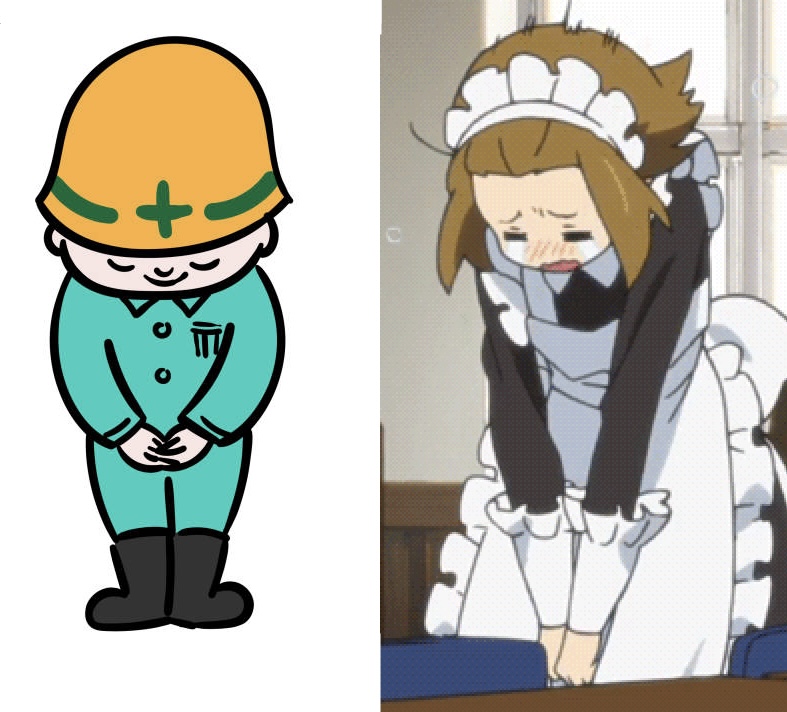
Politeness in Japanese culture is both legendary and historic. (Some polite Japanese customs date back centuries to ancient times.)
Figuring out all of the little etiquette rules — from bowing to proper eating habits to polite business practices — can take some time and effort to learn and master. When in doubt, it never hurts to apologize.
People have said that politeness is the glue that holds society together. And sumimasen and gomenasai are key ingredients in Japan’s societal “glue.”
Once you learn these simple, basic phrases, they will go a long way toward making your social interactions in Japan easier.
