
Tetsuya Chiba’s 70th-anniversary print exhibition opened at Osaka Takashimaya on July 22 and runs through July 28, 2026, turning one corner of Namba into a compact stop for anyone who wants to see how one of manga’s most enduring careers is being framed in this milestone year. The venue is the department store’s 7F POP UP STATION [7F1], and admission is free. That makes this less like a formal museum retrospective and more like an accessible city-center exhibition built around the pleasure of seeing familiar scenes, character faces, and commemorative works up close. Even so, the scale described by the organizers is substantial: about 80 print works will be displayed and offered for sale, with Ashita no Joe at the center of the public-facing lineup.
What Was Announced in Osaka
Osaka Takashimaya’s event notice says the exhibition is scheduled for one week only, from Wednesday, July 22, to Tuesday, July 28, 2026. The venue closes at 7:00 p.m. on regular days and 6:00 p.m. on the final day, which is the kind of practical detail that matters in a department-store event space where visitors often drop in between train connections, shopping, and evening plans in Namba. The store places the exhibition at POP UP STATION [7F1] on the seventh floor, and the access description ties it directly to the area’s major transport links, including Osaka Metro Namba Station, Osaka-Namba Station for Hanshin and Kintetsu lines, and Nankai Namba Station.
The exhibition itself is being presented as a 70th-anniversary Tetsuya Chiba print exhibition at Osaka Takashimaya, not as a single-series pop-up. That distinction matters because Chiba’s career reaches far beyond one title, even if Ashita no Joe is the name that most immediately anchors the event for many visitors. The release from organizer Art Space describes the show as a chance to trace 70 years of Chiba’s work through approximately 80 prints, and it explicitly says those works will be both exhibited and sold. The emphasis is on famous scenes from beloved classics, strong figure work, and the human drama that has long defined Chiba’s storytelling.
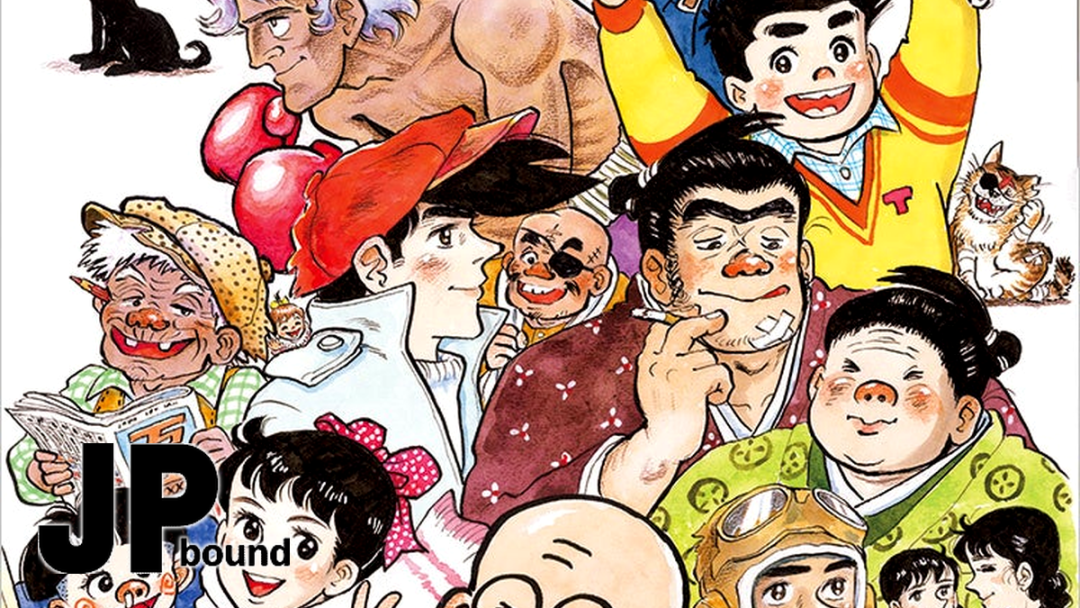
There is also an added milestone element that gives the Osaka stop its own identity. The announcement says a newly created 70th-anniversary work will be shown as well, and Takashimaya’s notice describes it as the first showing of that piece in Kansai. That means the Osaka event is not simply repeating a familiar set of images without change. It is being positioned as part of the active anniversary rollout, with at least one commemorative work carrying a regional first.
What Visitors Can Expect From the Exhibition
The strongest draw is still Ashita no Joe, and the promotional material leans into that history without treating the show as a narrow franchise event. The release highlights prints based on major scenes from Chiba’s celebrated works, with Joe clearly serving as the emotional center. Sample pieces named in the release include “Shukumei no Rival (Rikiishi),” “Shukumei no Rival (Joe),” “Shukumei no Taiketsu,” and “Gong no Ato,” all drawn from the visual world that made Ashita no Joe such a lasting part of manga culture. Seeing those scenes translated into print form changes the experience a little. The art is no longer tied to page turns or episode pacing. It becomes something to stand in front of, study, and compare.
The organizer also frames the exhibition as a broader career survey. Chiba, born in Tokyo in 1939, made his professional debut in 1956 and went on to create or help shape titles such as Ore wa Teppei, Notari Matsutaro, and Ashita Tenki ni Naare, alongside Ashita no Joe, originally created with writer Takamori Asao. The release makes a point of connecting this exhibition to Chiba’s long public standing in Japanese manga, including his role as president of the Japan Cartoonists Association, his selection as a member of the Japan Art Academy, and his 2024 receipt of the Order of Culture as the first manga artist to receive it. Those details explain why the event is being packaged as a 70th-anniversary exhibition rather than a simple sales fair.
The print medium matters too. The listed works are presented as limited-edition art prints rather than casual poster goods, and the sample prices show the range clearly. The newly created “Chiba Tetsuya Family – 70th Anniversary -” piece is listed at 176,000 yen including tax. The named Joe and Rikiishi prints are listed at 132,000 yen each, “Shukumei no Taiketsu” at 220,000 yen, and “Gong no Ato” at 77,000 yen. Even if a visitor has no intention of buying, those numbers help set expectations. This is a free-admission show, but the works on display are being treated as collectible art objects.
Planning a Visit Around Namba
Because the venue is inside Osaka Takashimaya, the exhibition is easy to fold into a day in Namba rather than something that requires a dedicated trip across the city. The address given in the release is 5-1-5 Namba, Chuo-ku, Osaka, and the access notes stress how close the store is to the area’s major stations and exits. For travelers, that means the barrier to entry is low: no separate ticket purchase, no long reservation instructions, and no complicated suburban transfer. You can arrive through one of Kansai’s busiest transport hubs, go upstairs, and step into a weeklong legacy-manga event that is short enough to feel time-sensitive without being hard to reach.
The schedule is worth keeping in mind if you want a slower visit. Since the event opened on July 22 and ends on July 28, the window is already running. Regular days close at 7:00 p.m., while the final day closes at 6:00 p.m., so late-evening plans should be built around those earlier department-store hours rather than museum expectations. That short run also gives the exhibition a little urgency. It is not a long summer installation. It is a brief Osaka stop in an anniversary year.
Anyone who knows Chiba mainly through Joe can see why the Osaka framing is appealing, because it holds two ideas together at once. It lets the boxing manga legacy do what it always does, pulling people in through recognition, rivalry, and the force of those iconic faces. At the same time, it places that recognition inside a wider celebration of a creator whose career stretches across decades and genres. The result is a visit built not only on nostalgia, but on the sense that Chiba’s work is still being carefully staged, newly commemorated, and given room to breathe in a major Kansai department store. The official event page and the Art Space release on PR Times present the same core picture: free entry, a one-week run, about 80 works, and a new anniversary piece making its Kansai debut.
FAQ
When is the exhibition running?
It opened on July 22, 2026, and continues through July 28, 2026.
Where is it being held?
It is at Osaka Takashimaya, 7F POP UP STATION [7F1], in Namba, Osaka.
How much is admission?
Admission is free.
What is on display?
The organizers say around 80 print works are being exhibited and sold, with Ashita no Joe among the featured titles.
Is there anything new at the Osaka stop?
Yes. The announcement says a newly created 70th-anniversary work is being shown in Kansai for the first time.
