
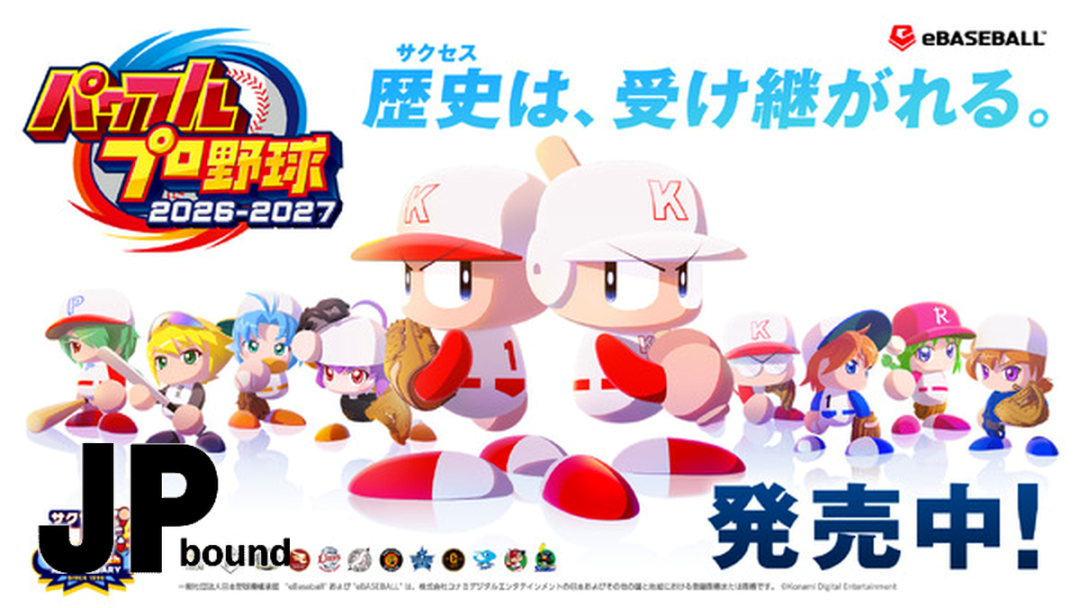
Powerful Pro Baseball is one of those Japanese game series that can look small from overseas until you understand how much culture sits behind its round-faced characters. PowerPro 2026-2027 is not only a sports release. It is a new entry in a long-running baseball language many Japanese players grew up with.
Inside Games reported that Powerful Pro Baseball 2026-2027 launched on June 11, 2026 for Nintendo Switch and PlayStation 4. The release includes Success 30th anniversary content, launch campaigns, collaboration goods, and Nijisanji cameo context from official materials.
Why Success Mode Matters
For many fans, Success mode is the soul of PowerPro. It turns baseball training into a character-building story, mixing sports progression with school, rivalry, comedy, and life-sim rhythm. A 30th anniversary focus is not just nostalgia. It is Konami pointing at the mode that made the series feel personal.
That matters for English readers because PowerPro is easy to reduce to “cute baseball.” Success mode explains why the franchise has stuck around. It gives players a story-shaped reason to care about stats.
The Collaboration Layer
The launch coverage also points to campaign and collaboration details, including Nijisanji-related cameo context from official materials. That is a very modern PowerPro move: a classic sports-game identity meeting the current VTuber and merch ecosystem.
Those details should be verified carefully from Konami’s official pages before listing specific characters or bonuses. Crossover coverage can move quickly, and fans will notice if a name or availability condition is wrong.
A Japan-First Baseball Series Worth Explaining
PowerPro does not need to become globally massive to be worth covering. Its importance is in how naturally it blends baseball fandom, character design, mode history, and seasonal Japanese game marketing.
The 2026-2027 launch is a good chance to explain that to readers who may know MLB games but not Japan’s own baseball-game tradition. It is cute, yes. It is also deeply practiced, long-running, and much more culturally specific than it first appears.
