
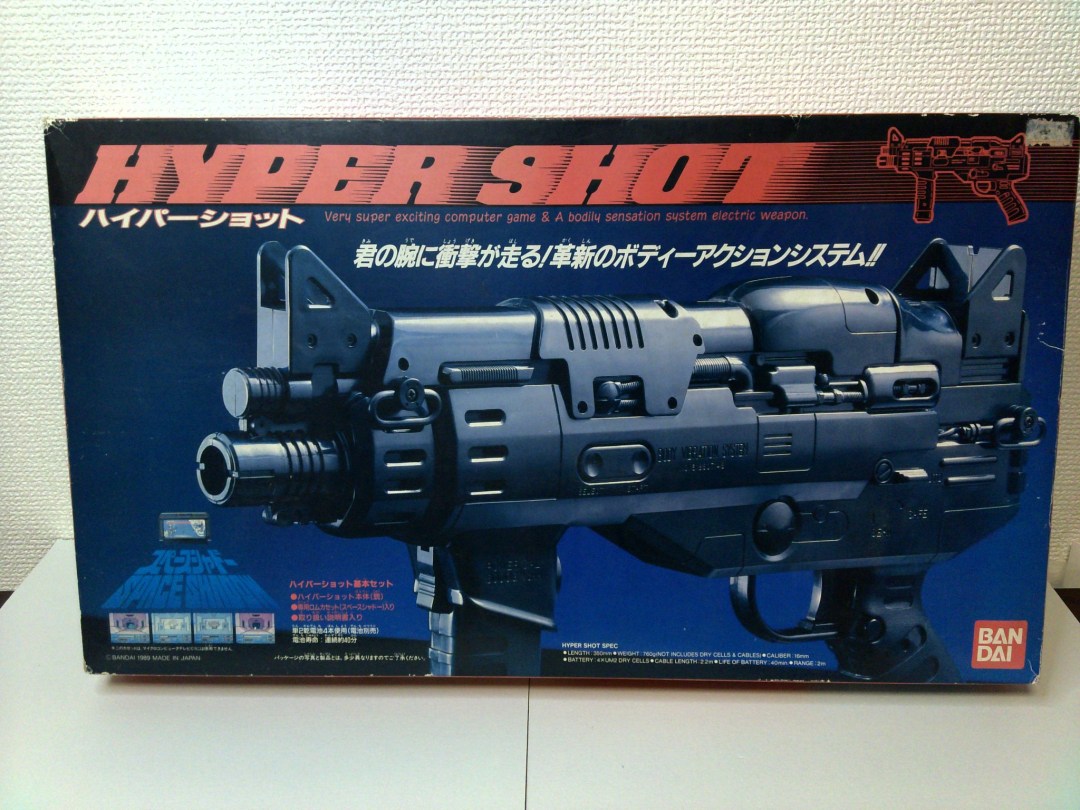
TL;DR
-
Oversized, sci-fi light gun for the Nintendo Famicom with vibration + sound effects.
-
Includes the original Space Shadow pack-in cartridge, manual, paperwork, cable, and styrofoam tray.
-
Very clean condition overall; box shows normal shelf wear.
-
A standout late-80s Bandai collectible—perfect for Famicom accessory enthusiasts and Japanese retro hardware collectors.
-
Works only on NTSC-J Famicom hardware and CRT TVs (typical for light guns).
Primary keyword: Bandai Hyper Shot Famicom
Semantic variations: Bandai 1989 Hyper Shot, Famicom light gun Japan, Space Shadow Hyper Shot set, vintage Bandai controller
Quick Specs
-
Product: Bandai Hyper Shot (ハイパーショット)
-
Year: 1989
-
Platform: Nintendo Famicom (NTSC-J)
-
Included game: Space Shadow cartridge
-
Feedback: Built-in vibration + speaker
-
Power: AA (UM-3) batteries for recoil/sound
-
Connection: Famicom expansion/cable
-
Made in Japan: Stamped © BANDAI 1989
-
Display requirement: CRT TV for gameplay functionality
-
Condition: Lightly handled; box has edge wear; cable still bagged
Overview / What It Is
The Bandai Hyper Shot is one of the most extravagant third-party peripherals ever released for the Famicom. While Nintendo had the Zapper, Bandai went in an entirely different direction: a large, sub-machine-gun-style sci-fi blaster equipped with vibration, onboard sound, and bold molded plastic detail.
Released in 1989, the Hyper Shot was made specifically for Space Shadow, a first-person, corridor-style shooter that used the gun’s built-in rumble and speaker to simulate recoil. In Japan, accessories like this were part of the late-’80s “gimmick peripheral boom,” where companies experimented with immersive controllers.
Today it’s a rare and visually striking piece of hardware—especially in boxed condition.
Product Images
Image copyright usage rights: You may use these images for any of your posts or projects, so long as you attribute Japan Bound as the creator and link to this post as the source of the images


How It Works
Even though this particular unit is being sold untested, here’s how the Hyper Shot was originally used:
-
Connect the gun via the included Famicom cable (the cable in this listing is still bagged).
-
Insert Space Shadow—the included cartridge in this boxed set.
-
Load AA batteries into the Hyper Shot so the vibration motor (marked as “BODY VIBRATION SYSTEM”) and built-in speaker can activate.
-
Use a CRT TV, since Famicom light guns rely on scanning-line timing that modern LCD/OLED screens don’t support.
-
Aim and fire through corridor stages while feeling the recoil through the motorized feedback.
For collectors, the Hyper Shot’s appeal is its oversized body and futuristic design—very much the late-’80s Bandai aesthetic.
Who Should Buy This
You’ll love this set if:
-
You collect Japanese Famicom hardware, especially rare or unusual controllers.
-
You want a clean, boxed example with paperwork and original tray.
-
You’re a fan of Bandai’s retro electronics era (LSI games, specialty peripherals).
-
You display retro gaming hardware and want something visually impressive.
You might skip it if:
-
You need verified working condition on modern TVs (it requires a CRT).
-
You don’t own a Japanese Famicom or AV-modified setup.
-
You prefer smaller/lightweight controllers.
Pros & Cons
Pros
-
Strong cosmetic condition—excellent plastic shine, minimal wear.
-
Space Shadow cart + manual + paperwork all included.
-
Styrofoam tray and original cabling preserved.
-
Collectible late-’80s Bandai hardware with display presence.
-
Rare to find this complete and this clean.
Cons
-
Untested—light guns are sensitive to age, cables, and TV compatibility.
-
CRT required for gameplay; LCD/modern TVs won’t work.
-
Box shows typical vintage wear at corners/edges.
-
Large, heavy peripheral—requires careful storage.
Setup / Usage Tips
-
Use a proper CRT—ideally a Japanese NTSC-J TV or a CRT that accepts Famicom-compliant composite input.
-
Insert fresh AA batteries for vibration/speaker features (the gun can still register shots without rumble).
-
Avoid sunlight—the black plastic can fade or show whitening over time.
-
Store in the included styrofoam tray to preserve shape and avoid stress on the cable.
-
If using in Japan today, note that many families still keep a small CRT TV; check リサイクルショップ (risaikuru shoppu, recycle shops) or ハードオフ (Hard Off) for cheap CRT options.
Popularity / Sales Numbers / Critical Reception
Exact sales figures for the Bandai Hyper Shot aren’t publicly documented—Bandai’s peripheral releases of this era rarely had detailed reporting. However, here’s what’s known:
-
Classified as a cult accessory among Japanese Famicom collectors.
-
Frequently discussed in retro hardware circles because of its oversized silhouette and vibration system.
-
Complete boxed sets like this appear infrequently on Suruga-ya, Yahoo Auctions Japan, and Mandarake.
-
When they do appear, condition greatly affects value—clean plastic, manuals, and original foam are highly sought after.
-
The included game, Space Shadow, is commonly bundled, but boxed Hyper Shot sets with preserved cabling and paperwork are less common.
Overall, the Hyper Shot is considered a collector-grade showpiece more than a gameplay-focused accessory today.
FAQs
Q: Does this work on NES?
Not without adapters—this was designed for the Japanese Famicom, not the overseas NES.
Q: Does it work on modern TVs?
No. Like all vintage light guns, it requires a CRT TV.
Q: Is the vibration motor guaranteed to work?
No—this set is untested due to age. Treat it as a display piece unless you plan to fully restore it.
Q: Are batteries included?
No, for safety reasons.
Q: Is Space Shadow a physical cartridge?
Yes—the listing includes the original 1989 cart.
Where to Buy
-
Japan Bound eBay Store (this exact boxed set)
If you message us on Japan Bound, you can buy it from us directly for 15% off the eBay price.
Additional Japan-based options (secondary)
-
Suruga-ya (retro hardware category)
-
Hard Off / Hobby Off (in-store finds only)
-
Yahoo Auctions Japan
-
Mandarake (Retro Game section)
About the Author
Limarc Ambalina is a longtime Japan culture and pop-culture journalist. He lives in Japan and is a longtime video game and Japanese pop culture memorabilia collector. The product images in this article were taken by him directly. The information in this article has been verified by his personal testing/usage of each product listed.
