
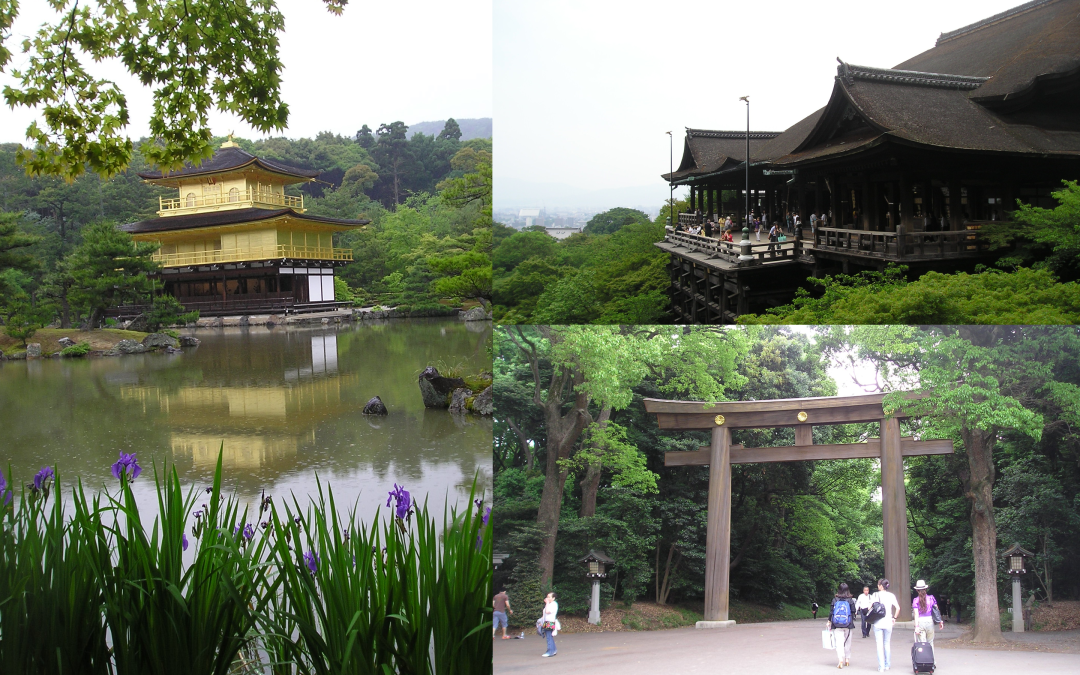
If you’re planning a trip to Japan, you will definitely want to visit some Japanese temples and shrines.
Temples and shrines are beautiful places. More than just religious places, many are also historically or culturally significant as well.
So, what is a Japanese temple? And how does a temple differ from a shrine?
At first glance, the answer sounds simple — Buddhism has temples, while Shinto has shrines. But the simplest definition doesn’t tell the full story.
Shinto vs. Buddhism
To understand shrines and temples, we need to understand Buddhism and Shinto.
Shinto
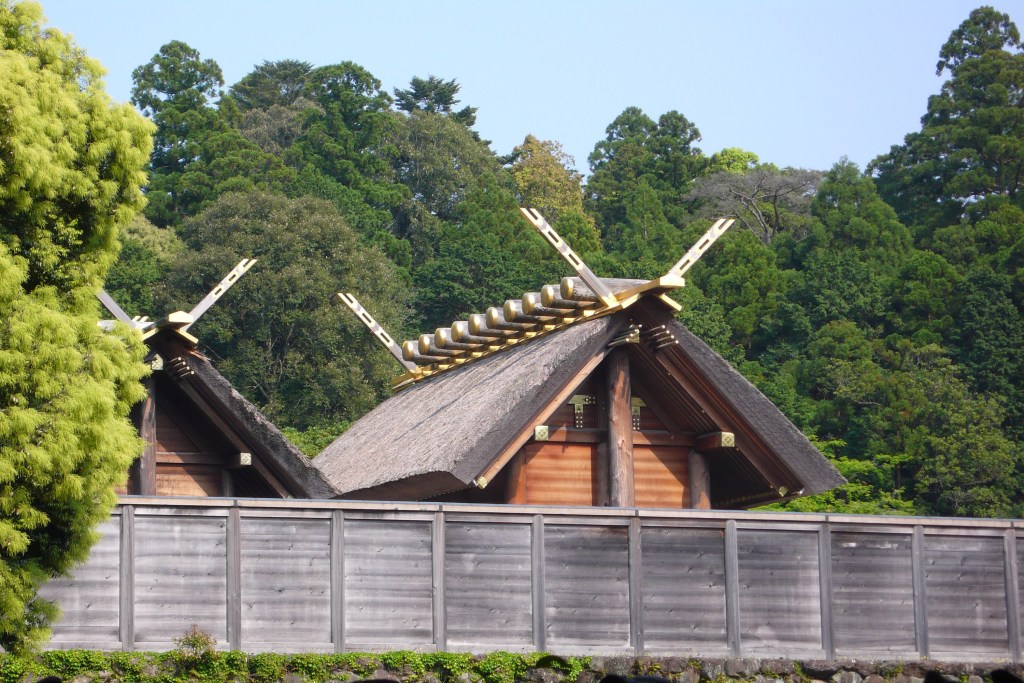
Historians think that Shinto dates back to the prehistoric arrival of the Yamato people to Japan. People classify it as a form of polytheistic animism — an ancient concept that predates most organized religion.
There is no one single monotheistic god in Shinto. Instead, Shinto includes many kami (gods or deities). In Shinto, anything (animals, rocks, plants, water, etc.) can have a metaphysical or divine spirit.
Originally, Shinto also held that the emperor was descended from Amaterasu, the sun goddess. (This belief has since been rejected and discouraged.)
Since nature is sacred in Shinto, it makes sense that many shrines have a touch of nature about them. For example, they may be surrounded by parkland, in the mountains, or built over water.
Buddhism
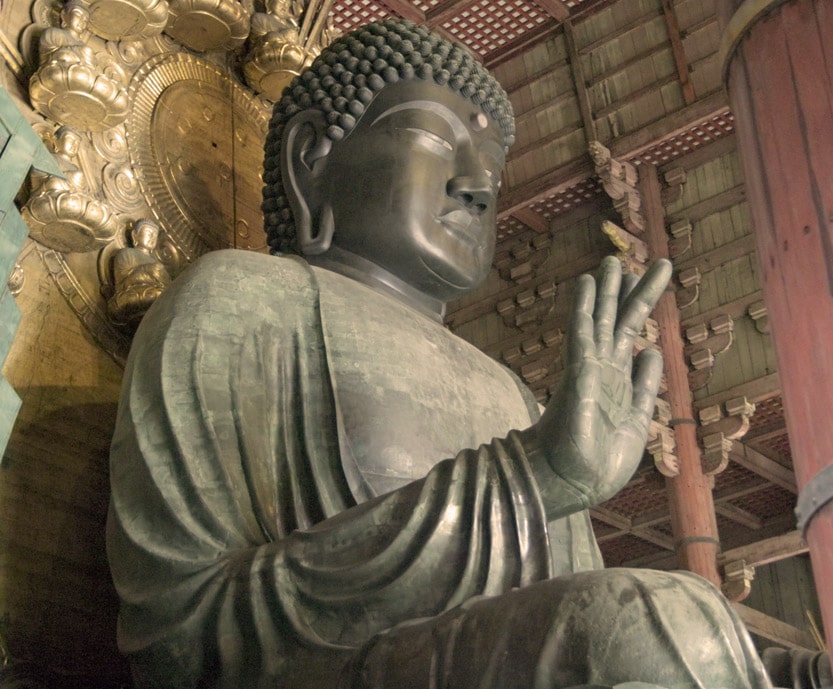
Buddhism was founded by Prince Siddhartha Gautama, a.k.a. “the Buddha,” or “the Enlightened One.” The religion emphasizes personal spiritual awakening. To help achieve enlightenment, Buddhists follow certain rules for living a better life. Many Buddhist branches are also concerned about life after death.
Buddhism began in India roughly 500 years BCE. But it didn’t reach Japan (from both China and Korea, according to most sources) until after 500 CE.
Today, Japanese Buddhism has many different schools, including Zen; Pure Land, Jodo, or Amida; Nichiren; Shingon; and Tendai.
Similar to Shinto, Buddhism is not monotheistic. (Buddha is not God.) Instead, Japanese Buddhism has a pantheon. Depending upon the school, this can include various deities and Bodhisattvas (beings on the road to enlightenment) — plus, of course, the historic Buddha.
Japanese temples often reflect Buddhist beliefs about peace, tranquility, and life after death in their architecture.
When it comes to temple architecture, Zen is known for its simple, meditative rock gardens. (Meditation is a traditional part of Buddhist practice.) But Kyoto’s bright and showy Kinkaku-ji (“Golden Pavilion”) is also from the Zen school.
Why Not Both?
It is sometimes said that if you add up the Japanese Buddhists and Shintoists, you will come up with a number that is larger than the total population of Japan.
That’s because quite a few Japanese people consider themselves to be both, or “Shinto-Buddhist.” It may sound strange to an outsider, but millions are also secular or nonreligious.
These ideas are not incompatible. Shinto has a lovely wedding ceremony, but Buddhism has better funeral rites. And even nonbelievers like to celebrate both Buddhist and Shinto festivals.
Shinto may be the “environmental” religion, but there are plenty of Buddhist temples in natural landscapes. Some Buddhist temples also feature animals.
Shrines and Temples to Visit
Any of the following shrines and temples would be good ones to visit. No matter where you go, you will find interesting and beautiful temples and shrines across Japan.
Shinto Shrines
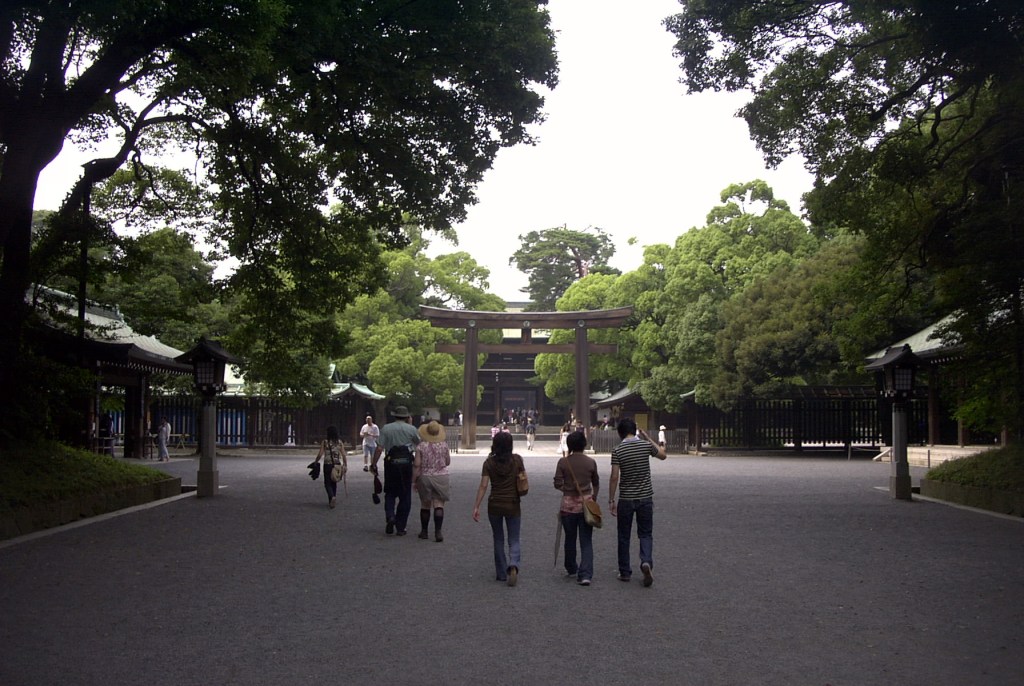
Meiji Jingu, Shibuya, Tokyo
Meiji Jingu is an oasis of nature in the middle of central Tokyo.
The shrine is dedicated to Emperor Meiji, a huge figure in modern Japanese history. The Meiji Restoration of 1868 replaced the Tokugawa Shogunate, and helped pave the way to Japan’s modernization.
In addition to the shrine itself, the shrine’s grounds feature a lot of peaceful and tranquil green space. These include a (man-made) sacred forest, and the lovely Meiji Jingu Gyoen (Inner Garden).
Directly outside Meiji Jingu is Harajuku, the famous fashion neighborhood.
Stations: Harajuku Station, JR Yamanote Line; Meiji-Jingumae (Harajuku) Station, Metro Chiyoda/ Fukutoshin lines.
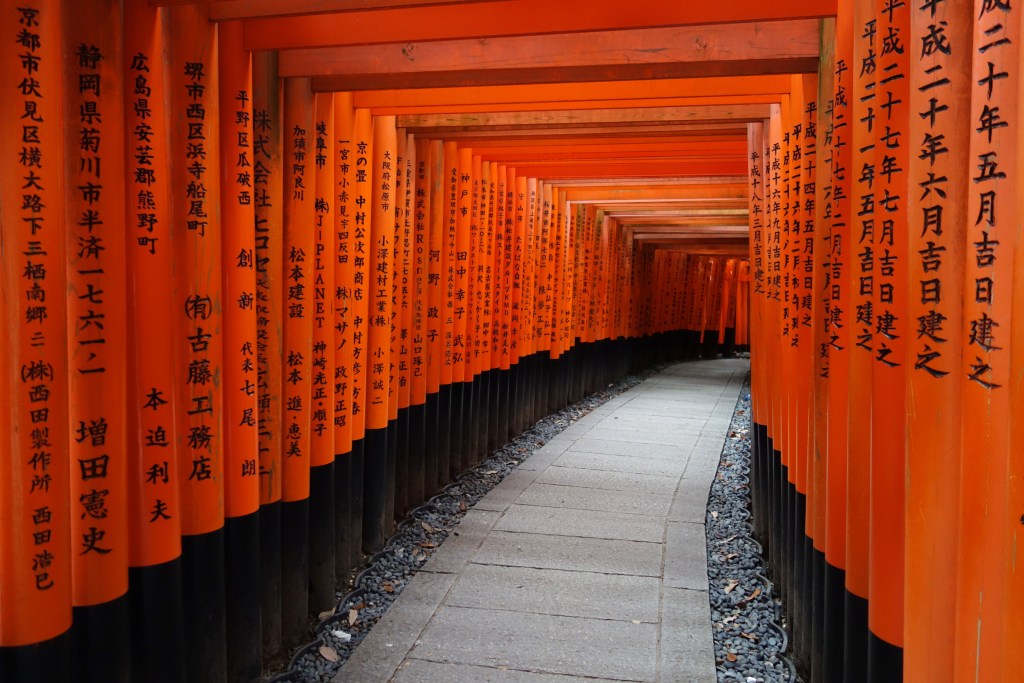
Fushimi Inari-taisha, Kyoto
In Japan, many Shinto shrines are dedicated to Inari, a kitsune (fox spirit) kami who is also a god of rice and agriculture. Fushimi Inari-taisha is the main one.
It’s famous for its many red-orange torii gates, or Senbon Torii. Each gate was donated by a person, company, or organization. Their names are written on the gates. There are more than 10,000 torii on the paths on Mt. Inari.
The whole distance covers 2.5 miles, with some smaller shrines along the way.
Station: Inari Station, JR Nara Line
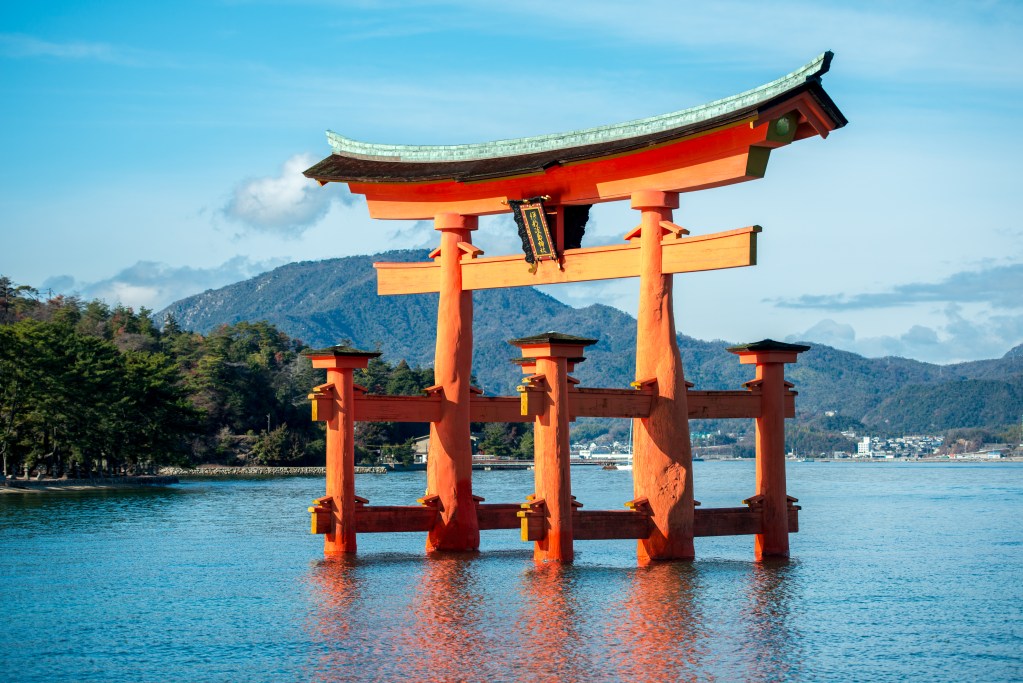
Itsukushima Jinja, Miyajima
This watery shrine is on the scenic island of Itsukushima near Hiroshima, although everybody calls the island Miyajima.
The shrine is built over water. The shrine’s most memorable feature is its torii gate, which guards the entrance to the cove where the shrine sits. The gate is best seen at high tide, when it seems to float in the water.
Getting there: To get to Miyajima, there are ferries from Hiroshima and from Miyajimaguchi Station.
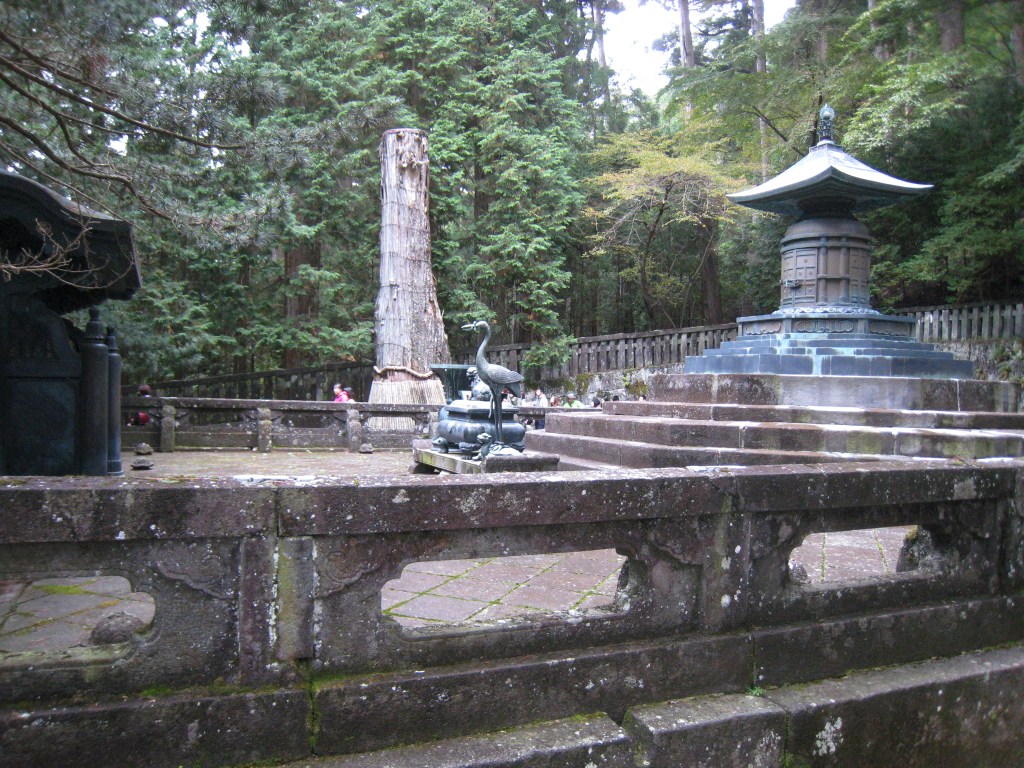
Nikko Tosho-gu, Nikko
Tosho-gu Shrine is one of the better attractions in the scenic hot springs mountain town of Nikko.
The shrine is dedicated to Tokugawa Ieyasu, the first Tokugawa Shogun. It contains many historic and cultural landmarks.
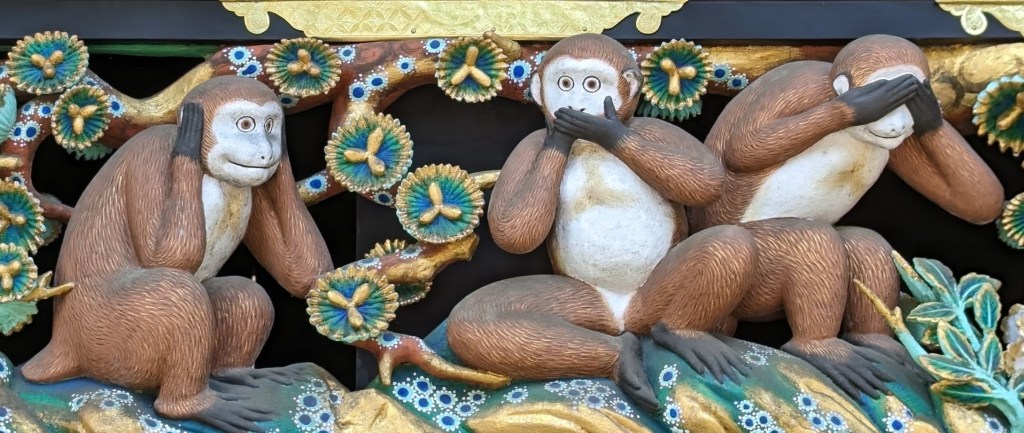
You won’t want to miss the Sanzaru, or Three Wise Monkeys — i.e., “See No Evil, Hear No Evil, Speak No Evil.” (The monkeys are Buddhist in origin, but the shrine is Shinto.)
Getting there: The World Heritage Sightseeing Bus goes from Tobu-Nikko and JR Nikko stations to the shrine.
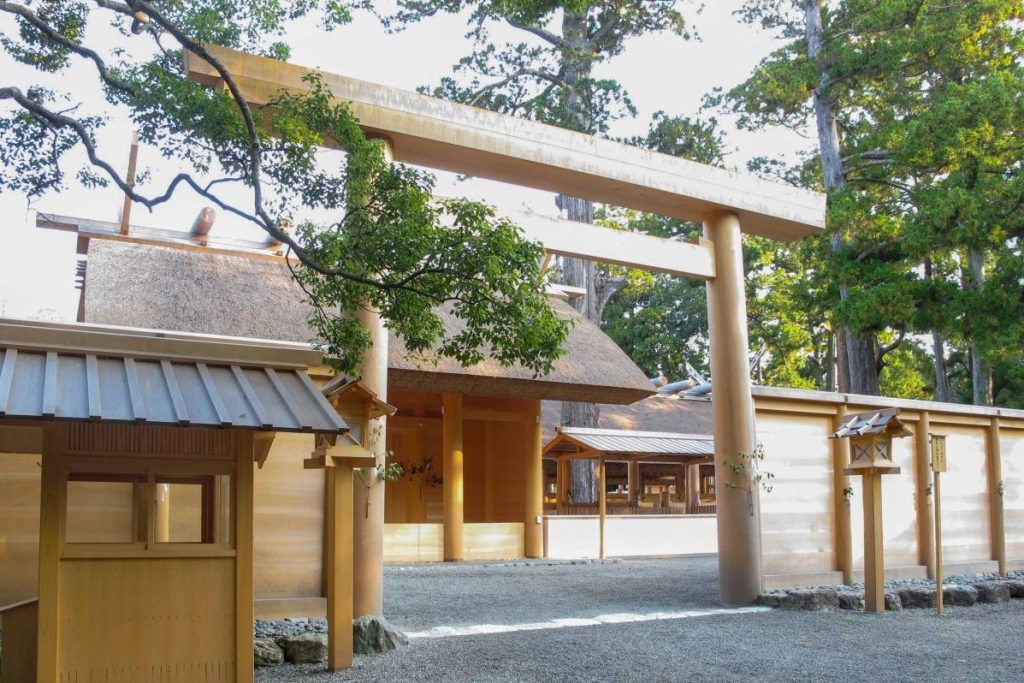
Ise Jingu, Mie Prefecture
Ise Grand Shrine is one of the holiest sites in all of Japan.
The shrine complex is dedicated to the sun goddess, Amaterasu. It is also home to the Yata no Kagami (sacred mirror), one of three ancient, mysterious, and secretive treasures which comprise the Imperial Regalia of Japan.
Naiku, the main Inner Shrine, is hidden behind fences. But visitors can see a lot of the rest of the complex.
Getting there: JR and Kintetsu Limited Express trains serve Iseshi Station in the city of Ise. Buses connect with Ise Jingu from there.
Buddhist Temples

Kiyomizu-dera, Kyoto
Kiyomizu-deru sits on a hillside at the eastern edge of Kyoto. Its famous viewing deck overlooks much of the former Imperial capital.
It’s also home to Otowa-no-Taki, a mountain spring waterfall which you can drink from. The pure water is divided into three streams, and each one is believed to bring a different benefit. (Drinking all three is considered bad luck, or at least bad manners.)
Getting there: Kiyomizu-Gojo Station (Keihan Main Line) is a 20-minute walk from the temple. You may prefer the buses from Kyoto Station.
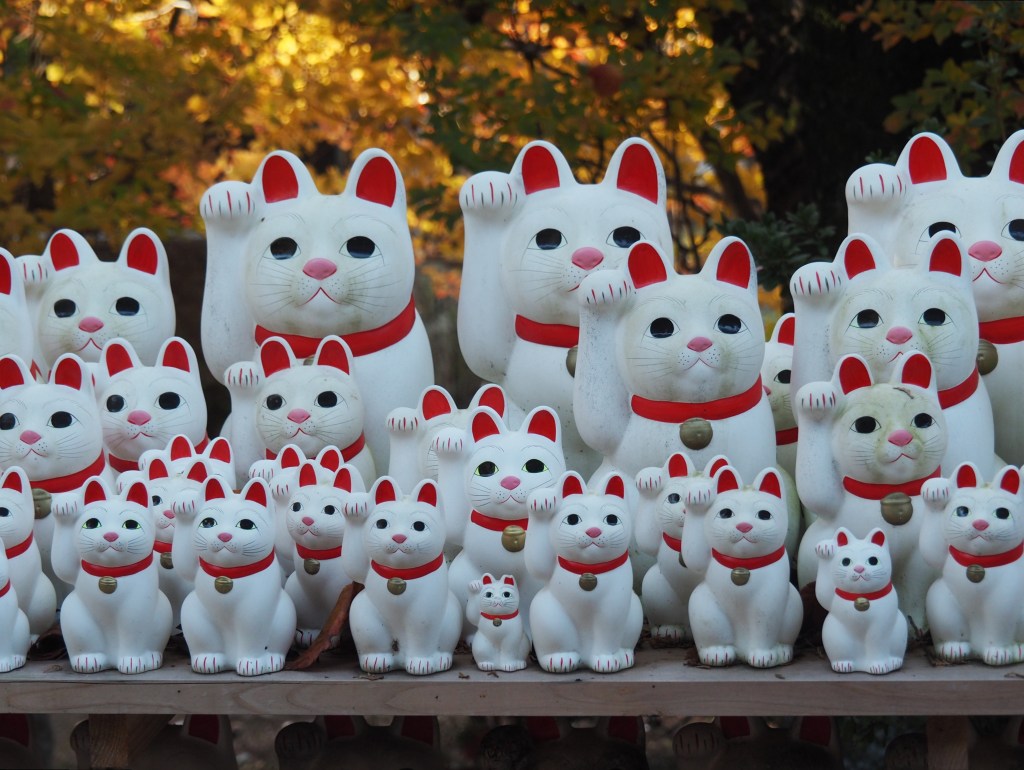
Gotoku-ji, Setagaya, Tokyo
According to legend, Gotoku-ji is home of the Maneki-Neko, or “Beckoning Cat.” As one version of the story goes, a feudal lord followed the cat into the temple, and avoided getting caught in a thunderstorm.
Dozens of cat figurines now fill this otherwise ordinary temple.
Station: Miyanosaka Station, Tokyu Setagaya Line
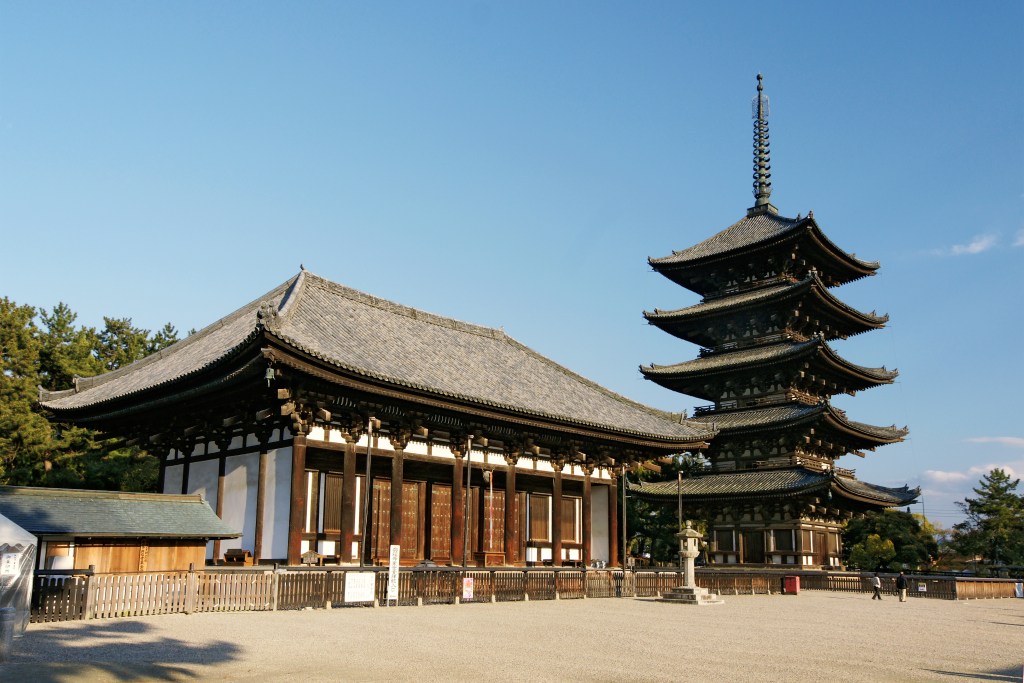
Kofuku-ji and Todai-ji, Nara
If you go to only one temple in Nara, it will probably be Kofuku-ji, because it is near Kintetsu-Nara Station. (JR Nara Station is further away.) Buy some deer crackers.
But, if you’re willing to walk a few blocks, Todai-ji is worth it. Unlike the Kamakura Daibutsu, you can’t see the 49-foot tall bronze Buddha until you get inside its building.
Station: Kintetsu-Nara Station, Kintetsu Nara Line

Kotoku-in, Kamakura
The Great Buddha of Kamakura is 43 feet tall. It was built during the Kamakura Period (1185-1333), when feudal warlords established Japan’s first shogunate.
The statue is specifically of Amida, the Buddha of the Jodo-shu branch of Pure Land Buddhism, which was established during the Kamakura Period.
Getting there: Hase Station, on the Enoden (Enoshima Electric Railway) streetcar line, is about 7 minutes from the temple.
Conclusion
This list contains just a sample of what Japanese temples and shrines are like. I hope you get the opportunity to visit one.
