
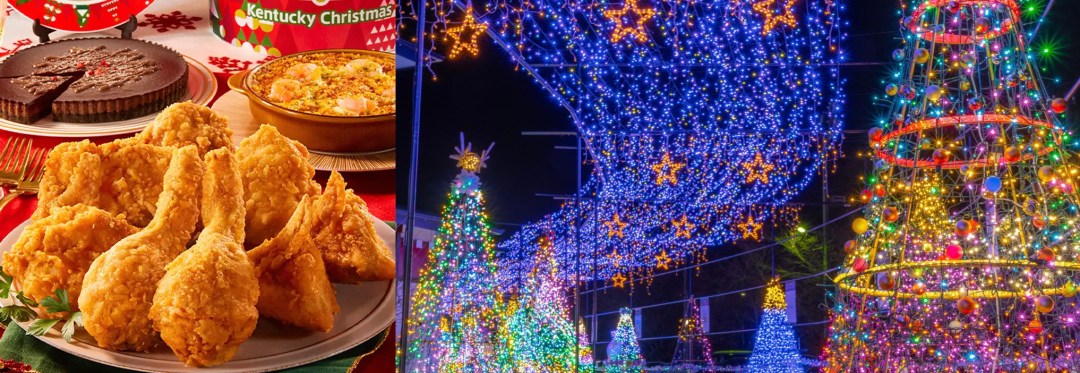
It may sound strange to some, but Japan does celebrate Christmas.
Of course, the Japanese version of Christmas is different from the Western one — but it’s also similar in many ways. Since Japan is not a predominantly Christian society, they don’t associate Christmas with any religious beliefs in their present-day celebration of the holiday.
To understand more, let’s take a look at the history, and explore the traditions of a Japanese Christmas.
The Early History of Christmas in Japan
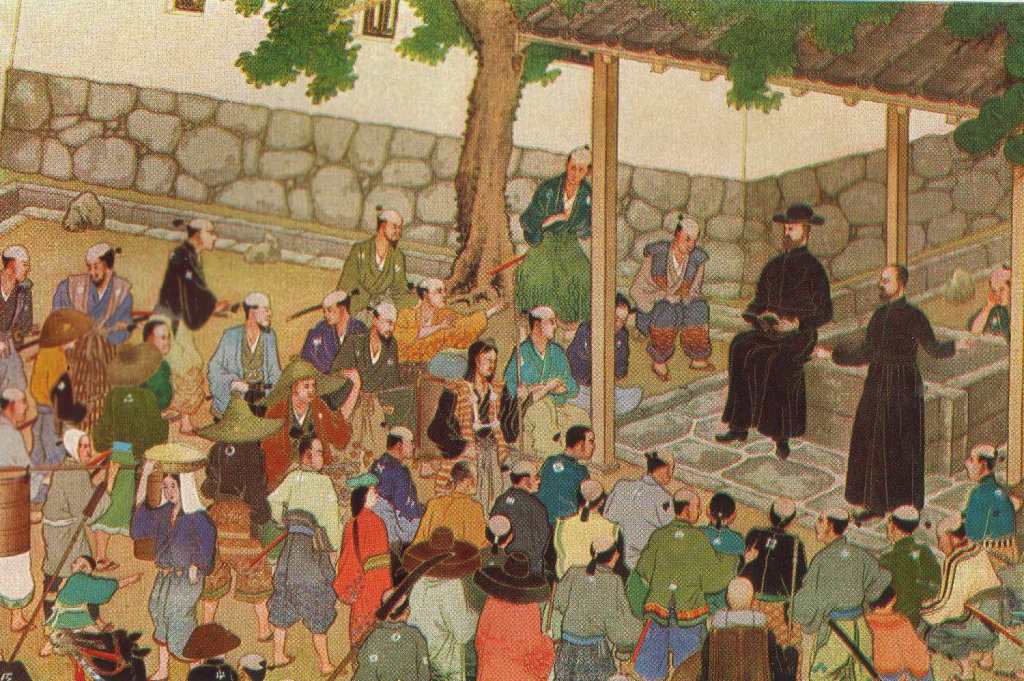
It’s generally accepted that Christmas first arrived in Japan with St. Francis Xavier, a Spanish Jesuit missionary. (Although he was born in Spain, he worked with and for the Portuguese.)
We think that Catholic missionaries held the first Japanese Christmas celebration in 1552. This small and strictly religious event bore little resemblance to a modern Christmas. There was definitely no Santa Claus nor a Christmas tree, neither of which had been popularized in the West yet.
In any case, the Japanese government distrusted and even banned Christianity, especially after the Shimabara Rebellion of 1637, which featured Japanese Christians. After that, the Edo era (1603-1868) would not see any public Christmas celebrations.
During the Meiji Era (1868-1912), Japan started to open up to outside ideas. This included more religious tolerance. But there were few Christians in Japan at the time. And they still remain a tiny minority today.
So, how did Christmas grow into a relatively popular holiday in a non-Christian nation — especially given the close proximity to the giant, traditional holiday that is Japanese New Year?
Translating Christmas Traditions into Japanese
Japan’s population is overwhelmingly Shinto-Buddhist, not Christian. As a result, the Japanese version of Christmas is extremely secular. It helps that since World War II, Japan has become increasingly ambivalent toward religion in general.
Japan often adapts Western ideas to fit the Japanese lifestyle — turning schnitzel into katsu, for example. And Christmas is no exception. But Japan also borrowed some traditions as they were, and didn’t bother to change them much.
Christmas Trees

The first Christmas tree (クリスマス ツリー) in Japan was likely one displayed in 1860 by a Prussian, the Earl of Eulenberg. The Earl was a Prussian diplomat living in Japan at the time.
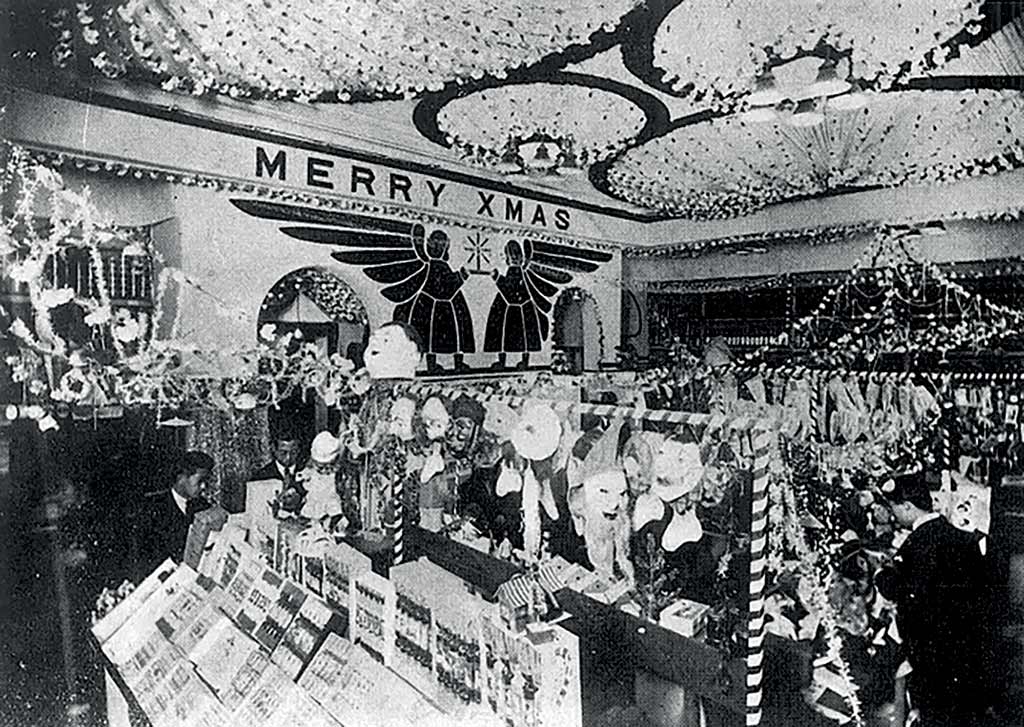
In 1904 (or possibly 1900), the Japanee grocery store Meiji-ya (also spelled Meidi-ya) displayed a Christmas tree in the Ginza shopping district of Tokyo. While this wasn’t the first Christmas tree in Japan, it was probably the first one decorated by Japanese people, rather than foreigners bringing a bit of home to Japan.
Then as now, Ginza was a busy, popular, and trendy location. Meidi-ya’s decorations and lights soon influenced other stores to have their own, and the tradition spread from there.
According to reports, Japanese people apparently buy more artificial trees than real ones. But, it’s possible that practical-minded consumers simply buy what they can find and afford. In general, artificial trees in Japan tend to be cheaper, and easier to find. They can also be re-used.
Japanese tree decorations range from very traditional Western balls, baubles, and lights, to more creative options. If you want to add a Japanese touch to your tree, you may want to consider paper fans and origami paper ornaments; handcrafted cloth temari balls; or kokeshi doll ornaments.
Holiday Lights
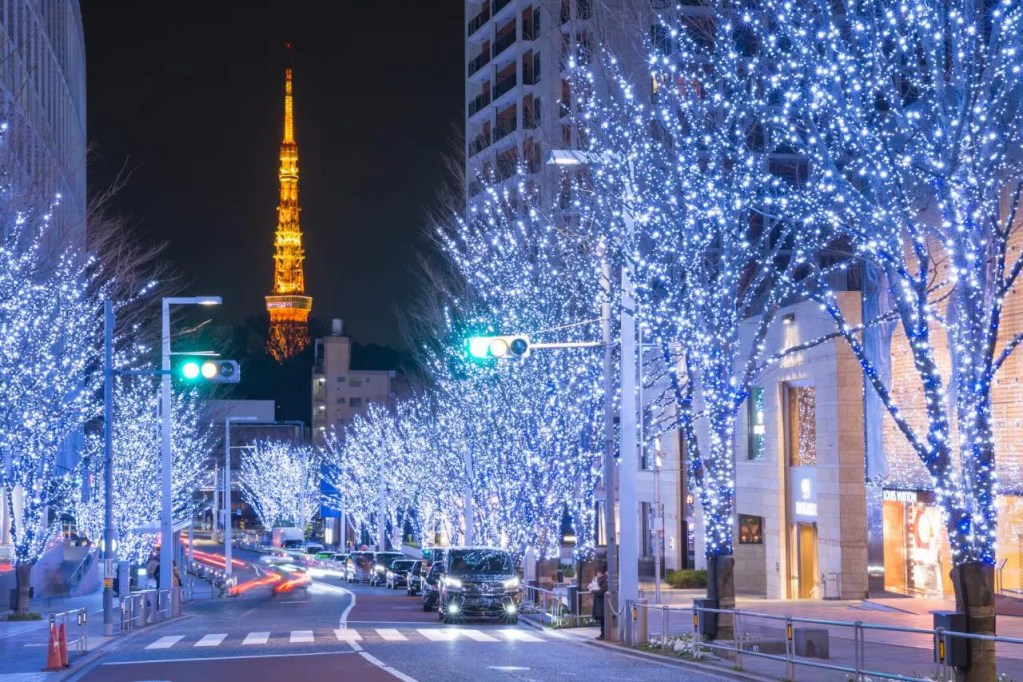
If you visit Japan in winter, you will likely run across a lot of holiday lights. Big, colorful displays can be found in many of Japan’s major cities.
You will have to pay to see some of the more spectacular ones — especially at places which charge admission, such as the amusement park Yomiuriland.
But you can find a lot of twinkling holiday lights in public areas as well. Some excellent, free light displays include Tokyo Midtown in Roppongi, the Sendai Pageant of Starlight, and Midosuji Illumination in Osaka.
Of course, many of these displays and decorations are in downtown shopping districts, where the local merchants hope that you will buy something while looking at the lights.
Shopping
Even before Christmas arrived, Japan already had gift-giving traditions, including omiyage (お土産) — a sort of “souvenir” gift given to others after a trip. Many Japanese people also give oseibo (お歳暮) gifts at New Years.
So, it is not too surprising that Japan adopted the Western tradition of buying, giving, and receiving gifts at Christmas.
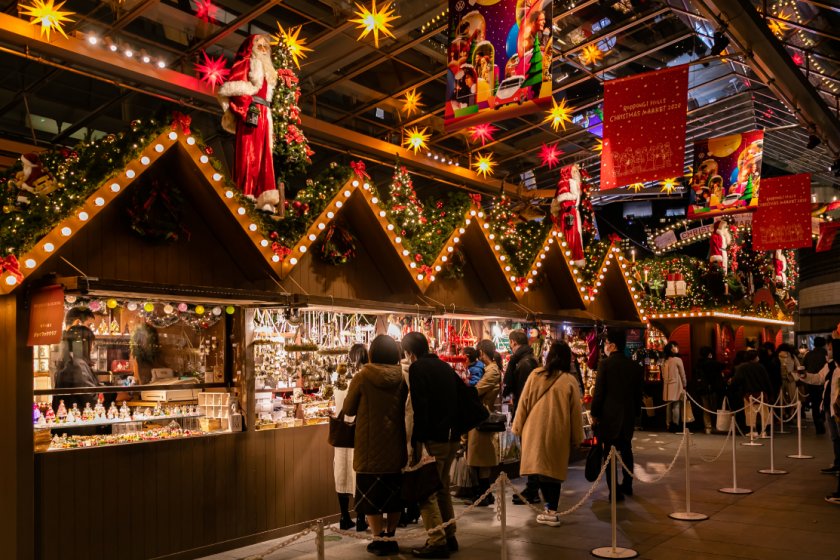
According to reports, Christmas gift-giving in Japan isn’t as big as it is in some places. However, Japanese retailers still expect to see increased sales during the winter holiday season. To that end, some places in Japan even adopted German-style Christmas markets.
But unlike Western nations, lovers and married couples give the most gifts.
As with most things in Japan, politeness matters when gift-giving. Here are some tips:
- Avoid the number 4, as it is unlucky. When wrapping gifts, green is considered lucky.
- Gifts, like business cards, are given and received with both hands.
- It is considered polite to refuse a gift at least once.
- Don’t rush to open gifts immediately (unless the giver says otherwise).
- Edible items (especially regional specialities) make good gifts.
- Japanese people traditionally also give a small “thank you” gift, or okaeshi (お返し), in return.
Christmas Cake
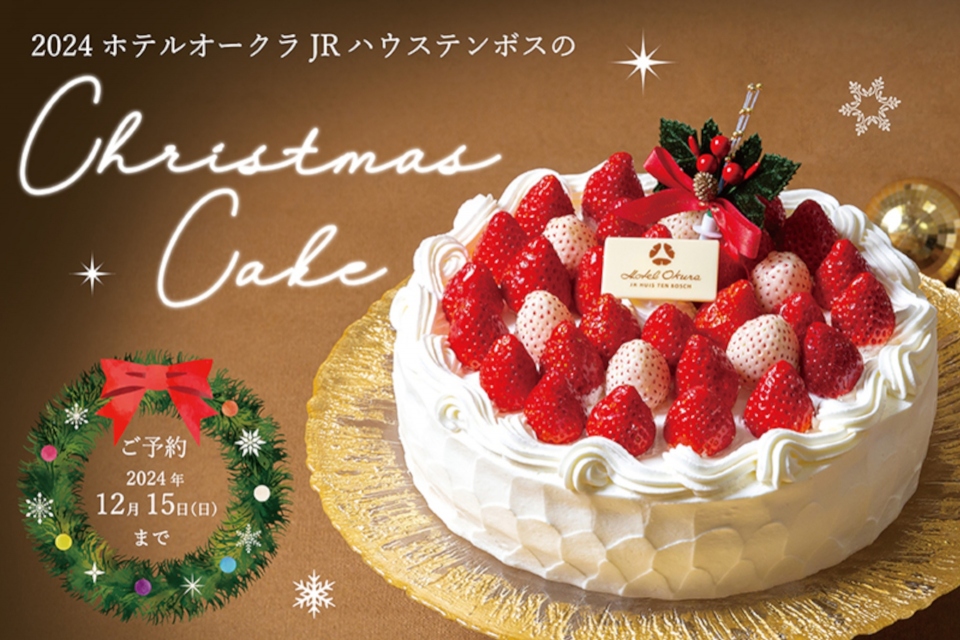
In Japan, Christmas cake (クリスマス ケーキ) is typically eaten on Dec. 24.
It’s not fruitcake. Japanese Christmas cakes are often sponge cake, or shortcake. Strawberries are popular, but plenty of other options exist.
And yes, it is insulting to call an unmarried 26-year-old woman “Christmas cake.”
Santa Claus

Around about the same time that Christmas trees were introduced, Santa Claus made his first appearance in Japan. In 1900, he showed up in a story book by Nobuyoshi Shindo. (That’s Santa in the above illustration.)
Shindo spelled his name Santa Kuro (三太 九郎). But Santa is more commonly pronounced Santa Kurosu (サンタ クロース), or just Santa-san (サンタ さん).
Some websites point out the weird coincidence of the “Japanese Santa” — Hotei, one of the Buddhist “Seven Lucky Gods.” Hotei is fat, jolly, a friend to children, carries a sack, and can create magic. But some also suggest that Santa may have started to influence Hotei.
Another Santa doppelganger is Colonel Sanders, which brings us to our next Japanese Christmas tradition:
Kentucky Fried Chicken
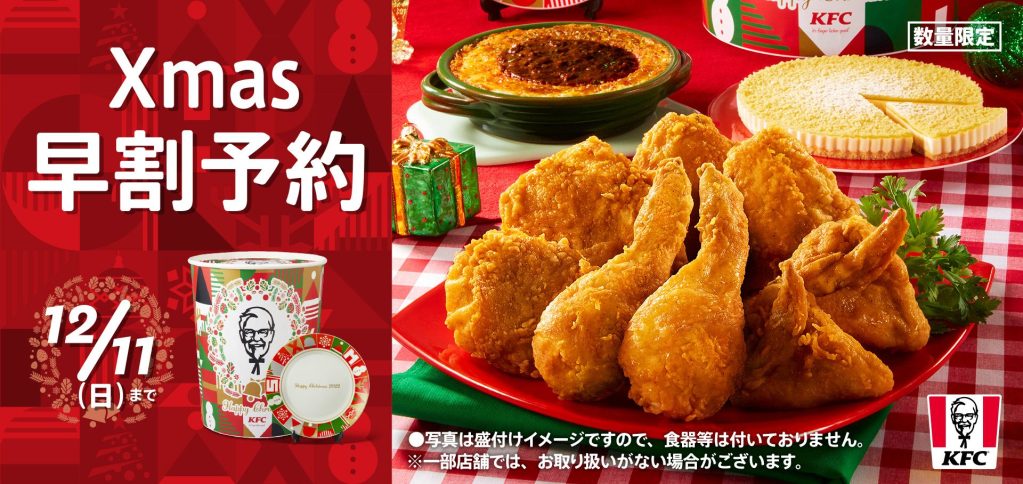
One of the better well-known Japanese Christmas traditions is eating KFC. But convincing Japanese people to eat fried chicken for Christmas required a lot of marketing and advertising.
Kentucky Fried Chicken first arrived in Japan in 1970. The fried chicken chain showed up at Expo ‘70 in Osaka, followed by a single restaurant in a suburban part of Nagoya.
According to reports, the American restaurant struggled until they adapted to local conditions — more urban locations, fewer mashed potatoes, etc.
The story changes depending upon who’s telling it, but all versions agree that KFC’s Christmas campaign began with restaurant manager Takeshi Okawara. Okawara apparently noticed that foreigners in Japan would buy fried chicken as a substitute for turkey during the holidays.
In 1974, KFC adopted the slogan, “Kentucky for Christmas.” They started promoting fried chicken as a “traditional” American holiday meal — except, of course, it wasn’t.
Whether the Japanese know the truth or not, it doesn’t matter. The successful campaign has continued for 50 years — long enough to become a tradition.
Christmas Lovers

If you’re an anime fan, you’ve probably noticed that a lot of Christmas episodes tend to involve romantic couples. That storyline reflects the real-life Japanese belief that “Christmas is for lovers.”
Online sources suggest several possible explanations for this. Gift-giving can be very romantic. Beautiful, twinkling holiday lights might also play a role — couples can go out and share an evening under the lights.
Others even blame Wham!’s deceptive ‘80s pop song, “Last Christmas.” This hit song has been covered (in both English and Japanese) by numerous people, including Sailor Mars. Apparently, the sad meaning of the lyrics got lost in translation.
I hope this gives you a pretty good idea of what Christmas is like in Japan. It’s definitely not the same as the U.S. version. But it’s worth experiencing at least once.
